
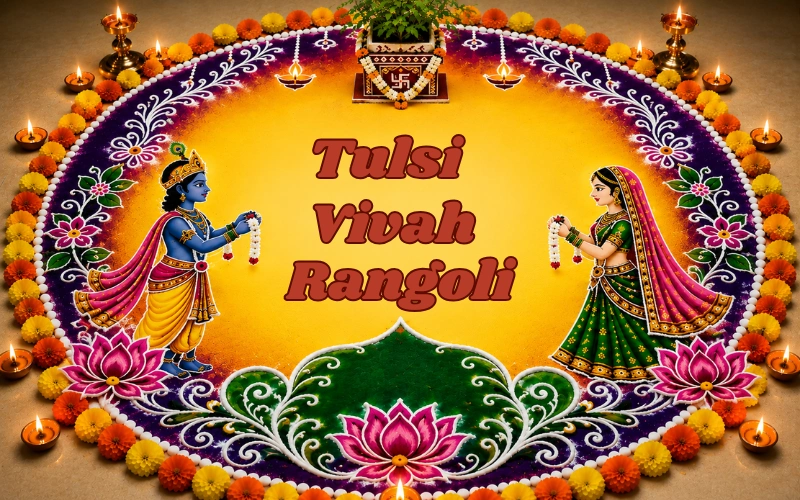
Tulsi Vivah Rangoli is a traditional Indian art form where colorful rangoli designs are created to celebrate the ritualistic wedding of the sacred Tulsi plant (holy basil) with Lord Krishna—a festival primarily observed in November, and it combines devotion, creativity, and cultural significance into beautiful floor art that transforms homes and temples during this auspicious occasion.
Quick Facts Table
| Aspect | Details |
|---|---|
| Festival Name | Tulsi Vivah or Tulsi Puja |
| Celebration Date (2026) | November 9-14, 2026 |
| Primary Regions | North India, particularly Uttar Pradesh, Madhya Pradesh, Rajasthan |
| Traditional Art Form | Rangoli (floor art using colors, flowers, rice) |
| Associated Deity | Lord Krishna |
| Cultural Significance | Celebrates spring season arrival and fertility |
| Materials Used | Colored powders, flowers, rice, cotton threads, rice paste |
| Typical Size | Small (2×2 ft) to Large (8×8 ft) designs |
| Difficulty Level | Beginner-friendly to Advanced |
| Popular Styles in 2026 | Geometric, Floral, Deity-centered, Modern Abstract |
The Classic Lotus Design
The lotus holds immense spiritual significance in Hindu culture, representing purity and enlightenment. This Tulsi Vivah Rangoli design features a large central lotus surrounded by smaller floral motifs and geometric patterns. The petals can be rendered in varying shades of pink and red, with a golden or yellow center that symbolizes prosperity. Adding intricate dots and lines between petals creates depth and visual interest, making this design suitable for those with intermediate artistic skills.
Krishna and Tulsi Romance Theme
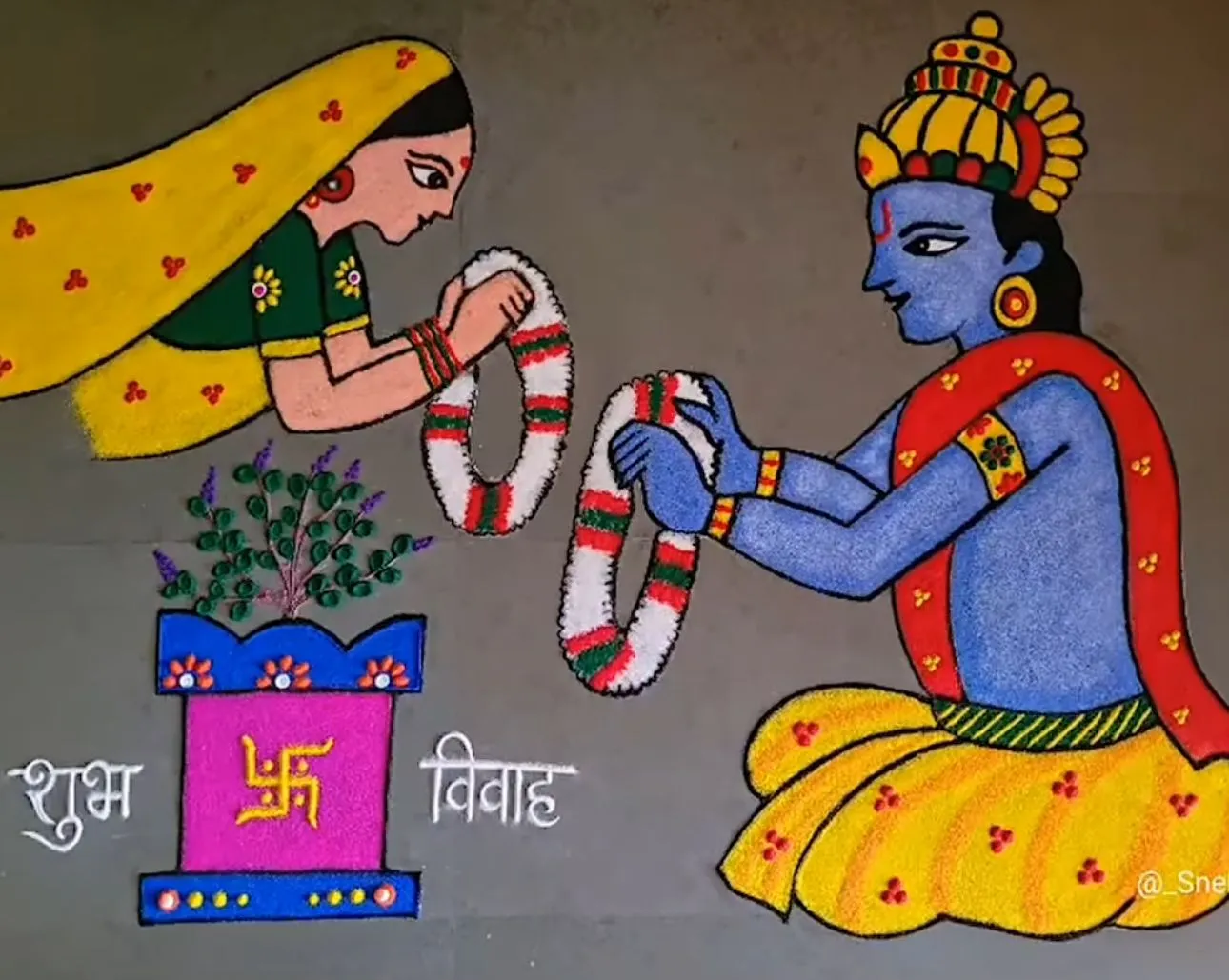
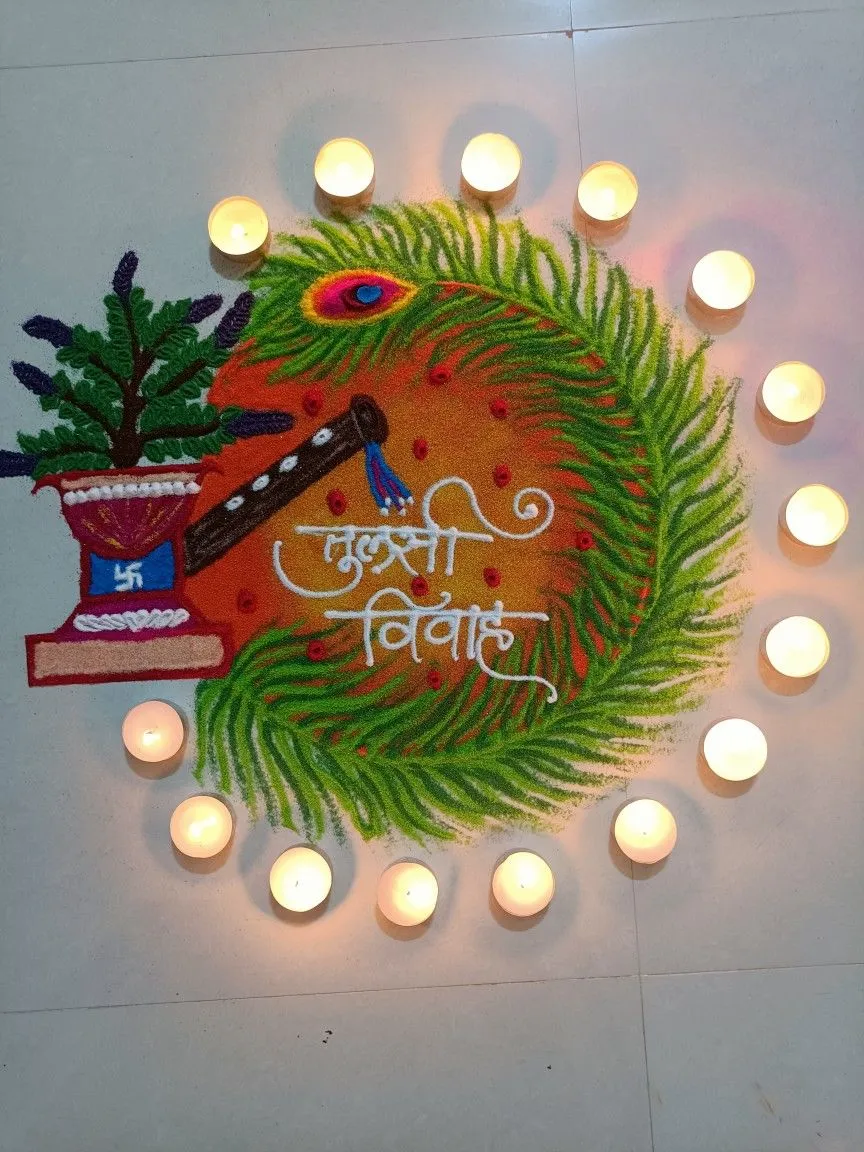
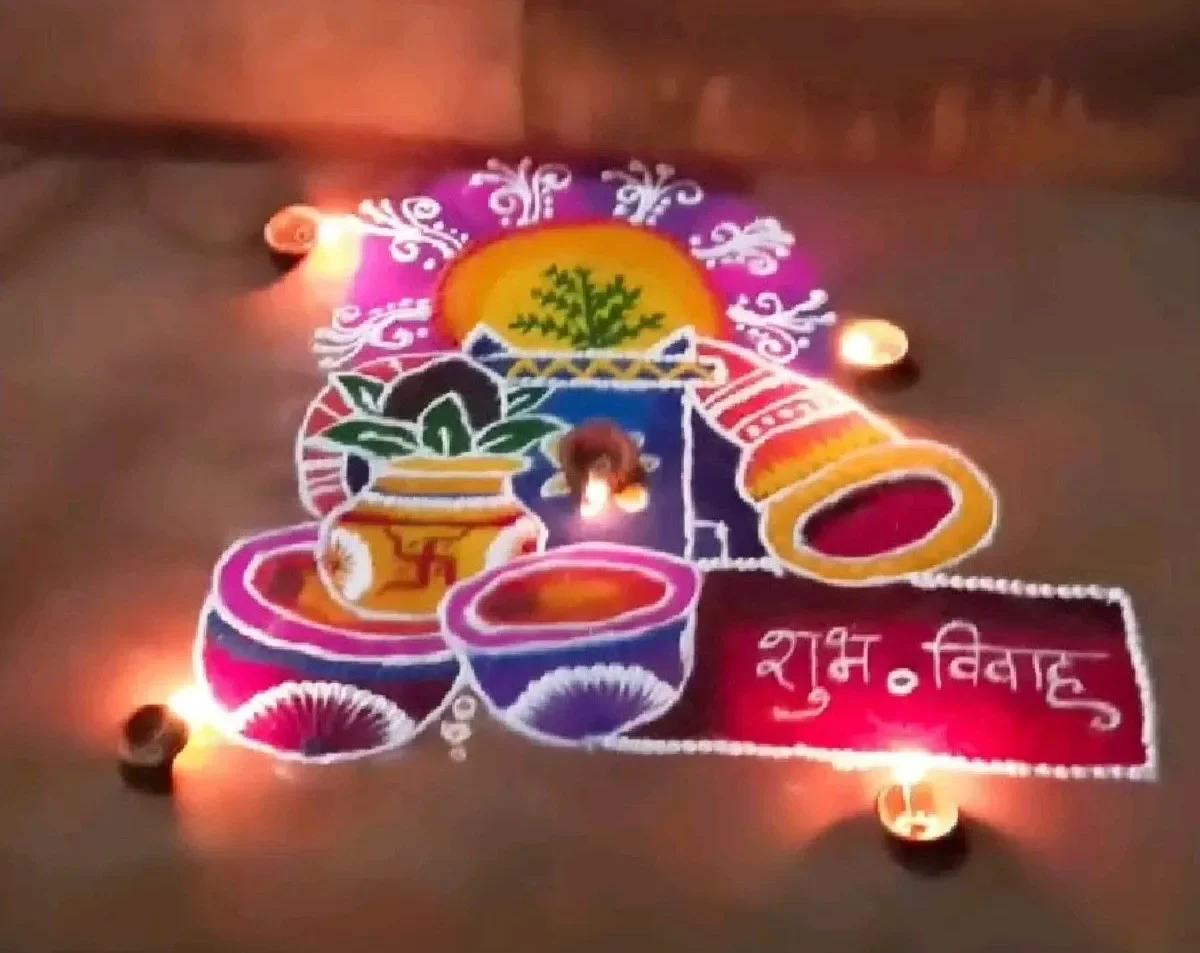
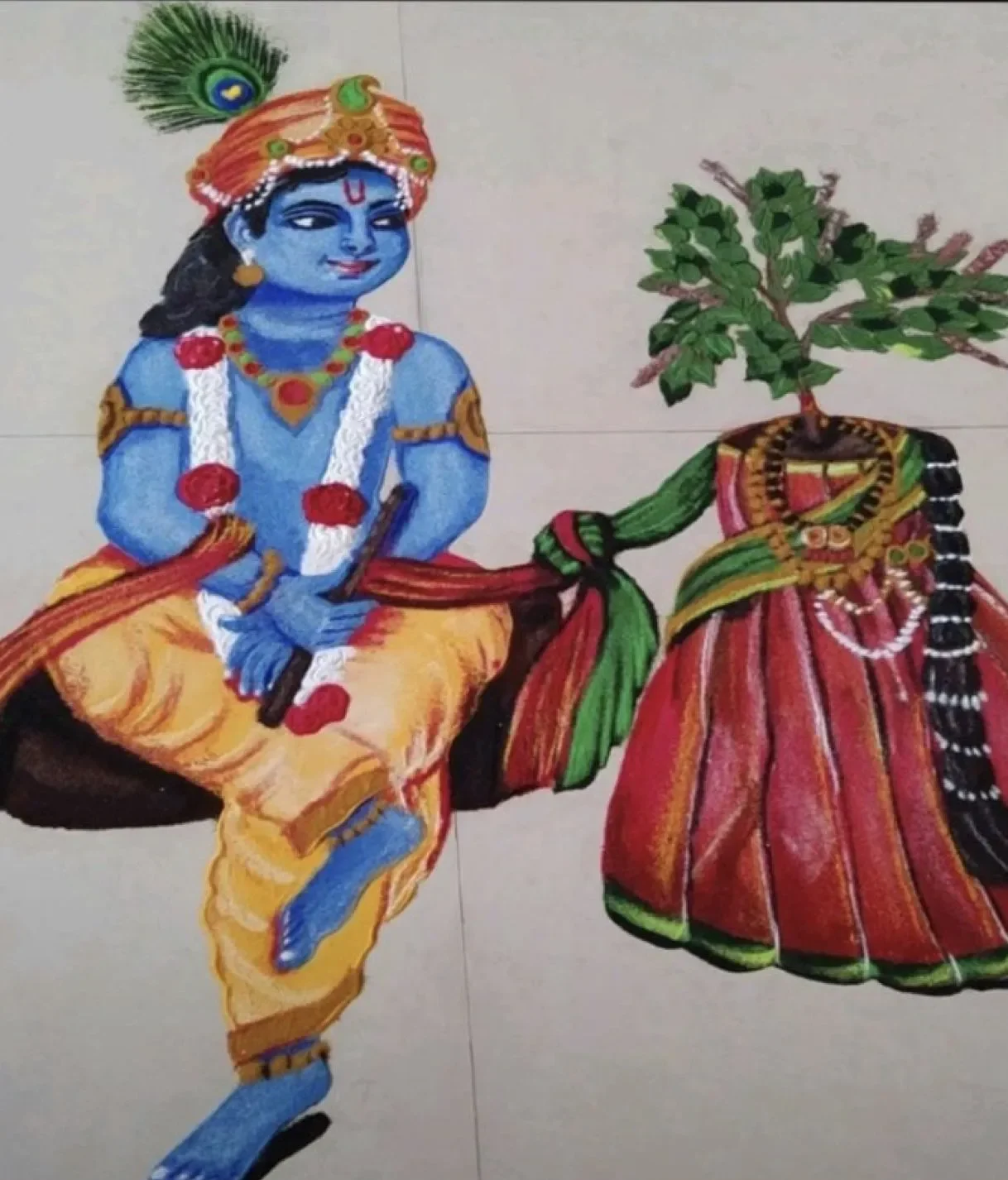
This thematic Tulsi Vivah Rangoli Design depicts the divine relationship between Lord Krishna and the Tulsi plant through artistic representation. Artists typically place Krishna’s profile or symbolic elements (like the flute) within the design, surrounded by Tulsi leaves, peacock feathers, and devotional symbols. This design requires more artistic confidence but rewards viewers with a deeply meaningful and recognizable pattern.
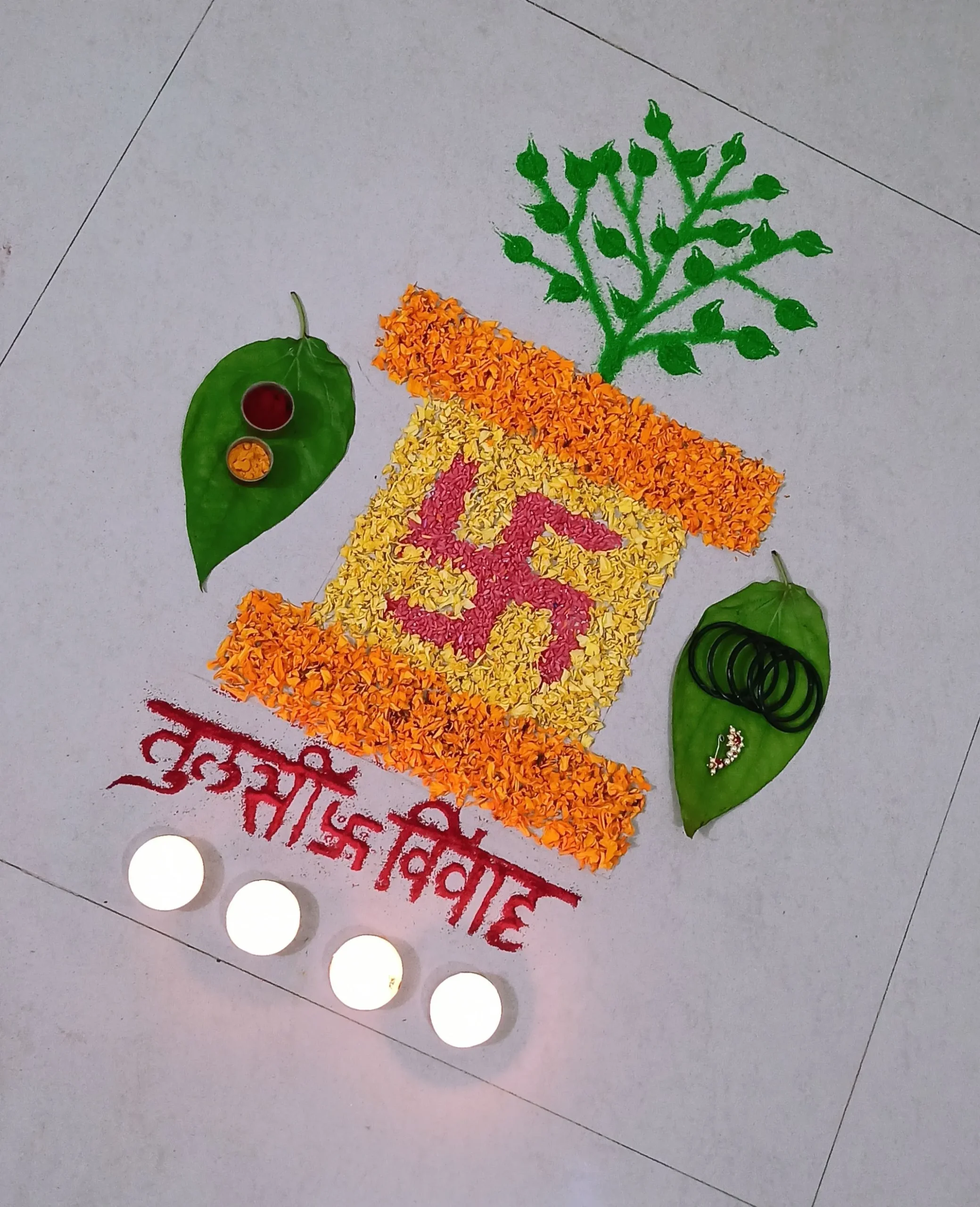
The Mandala Marvel
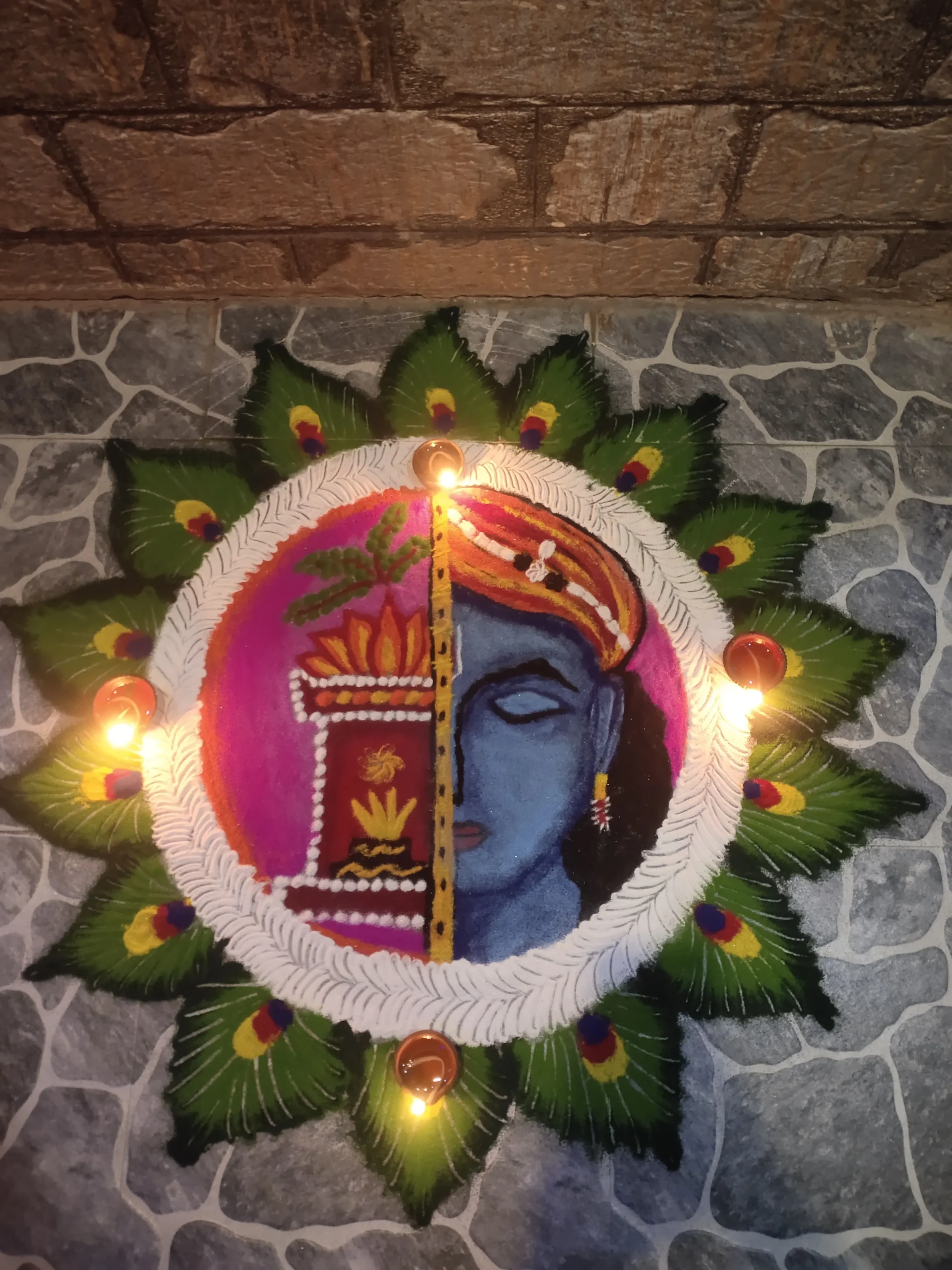
Mandalas represent the universe and unity in Hindu philosophy, making them perfect for Tulsi Vivah Rangoli creations. These circular, symmetrical designs radiate from the center outward, incorporating geometric shapes, floral elements, and sacred symbols. The beauty of mandala-based New Tulsi Vivah Rangoli designs lies in their mathematical precision—even slight imperfections contribute to their organic, appealing appearance.
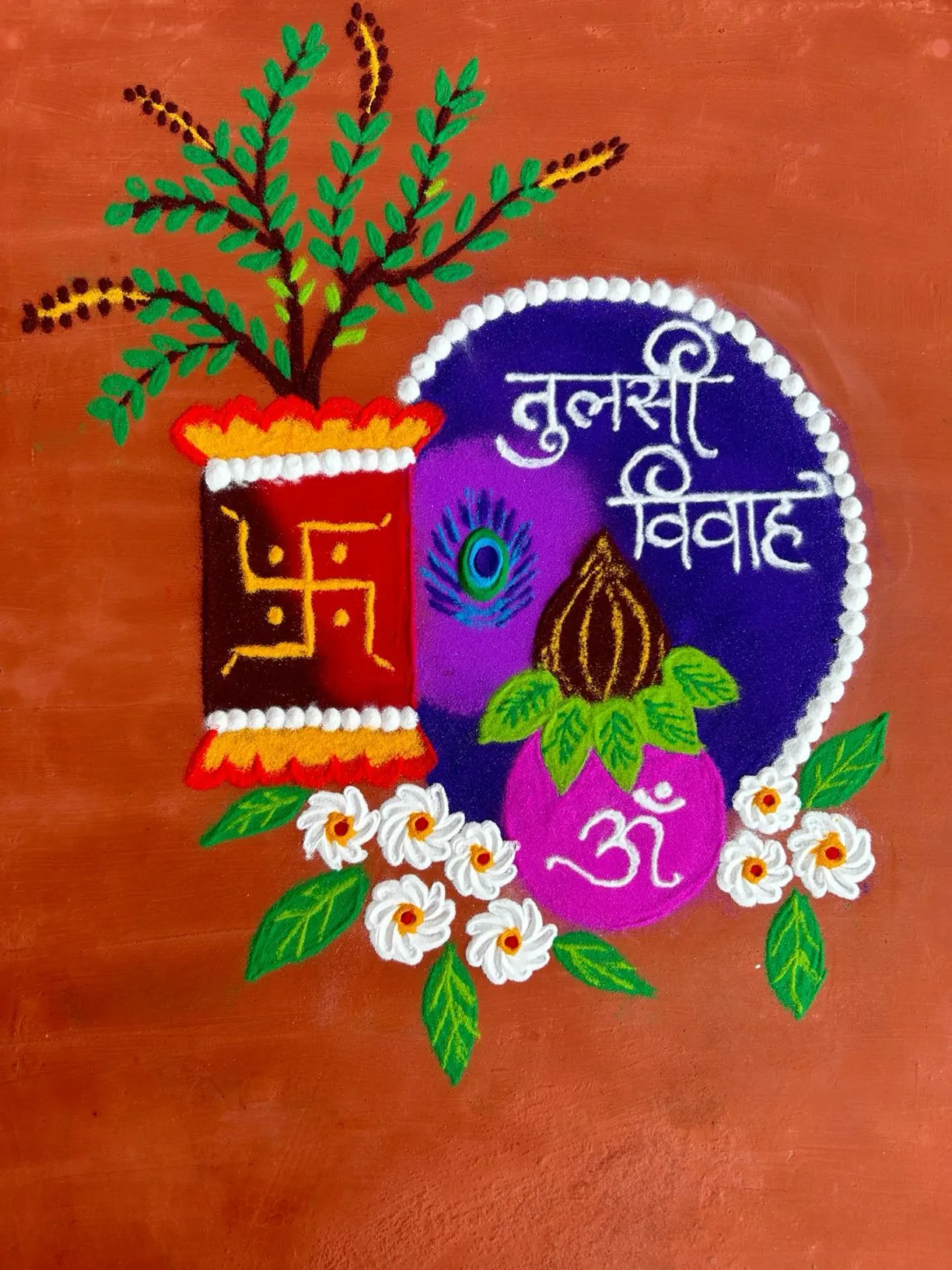
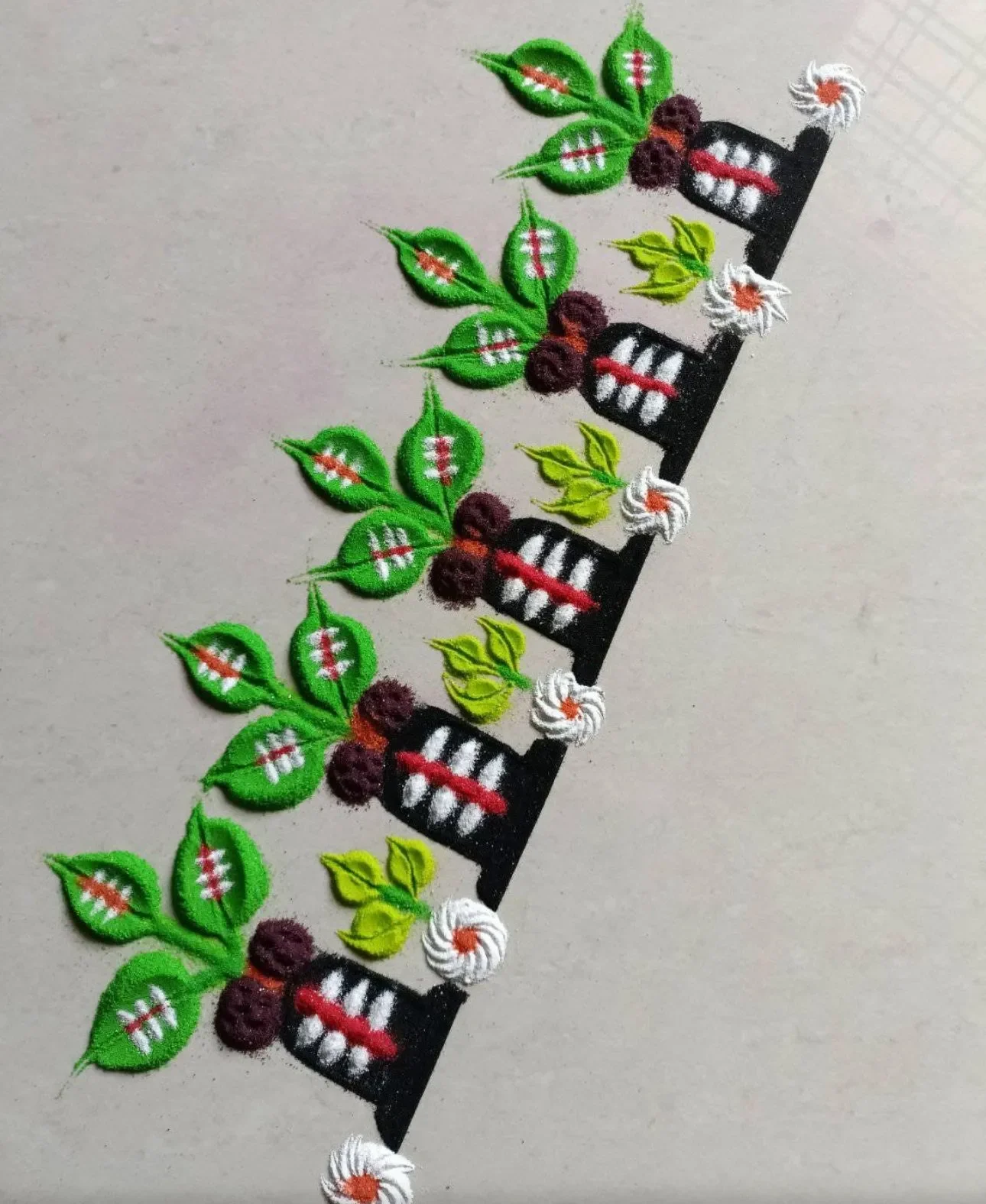
Floral Border with Central Tulsi
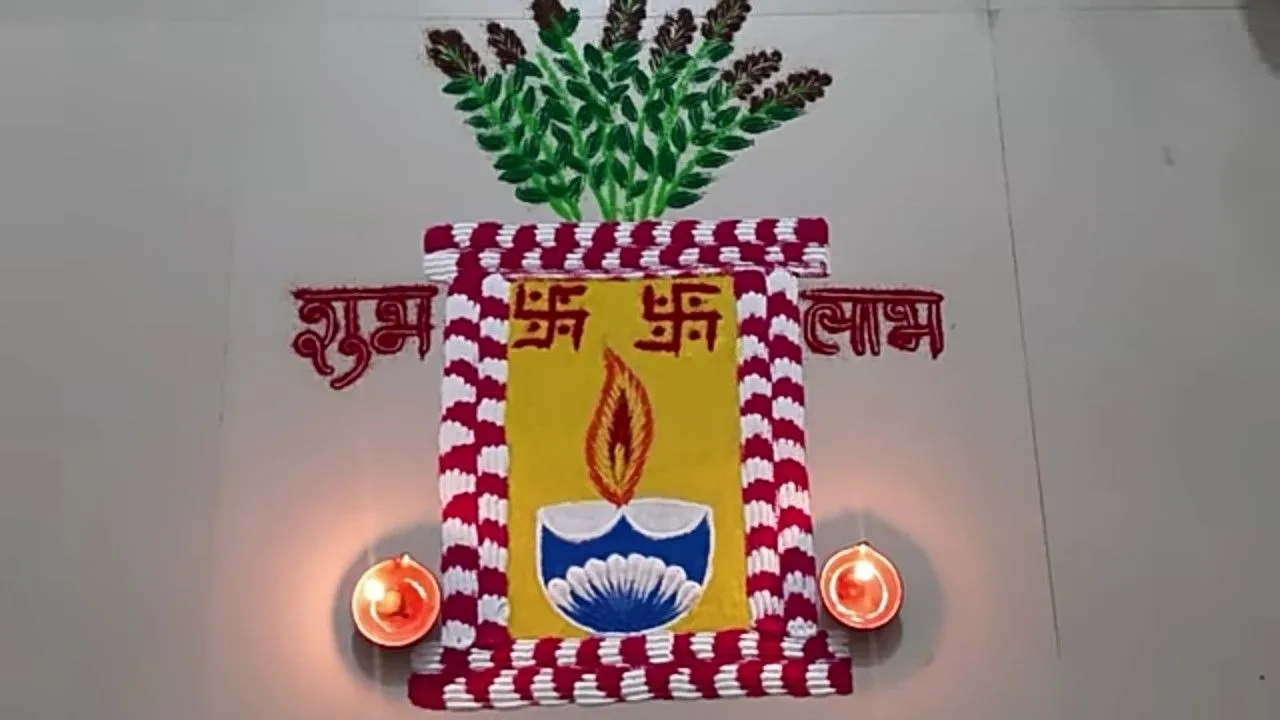
This elegant Special Tulsi Vivah Rangoli style frames a central Tulsi plant illustration with intricate floral borders. Marigolds, jasmine flowers, and leaves create authentic botanical authenticity while maintaining artistic beauty. This design bridges traditional and contemporary aesthetics, appealing to artists of all skill levels.
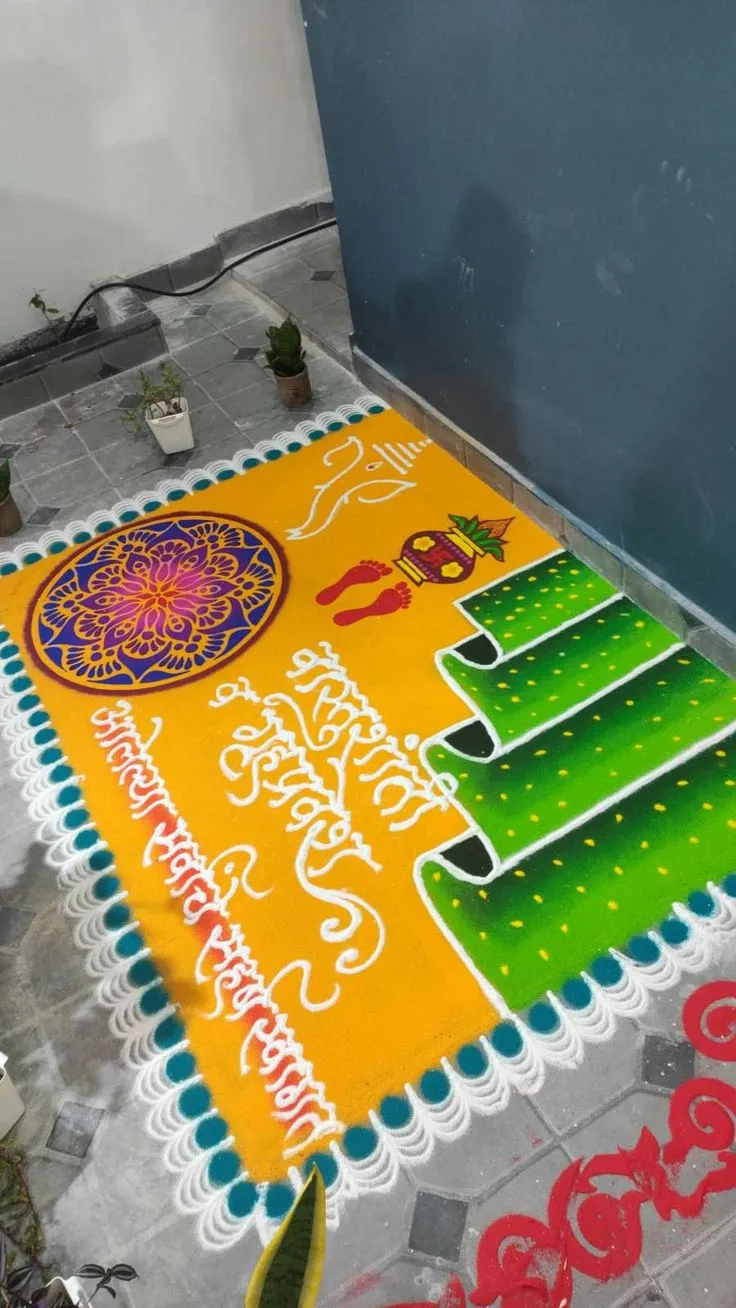
Geometric Minimalism
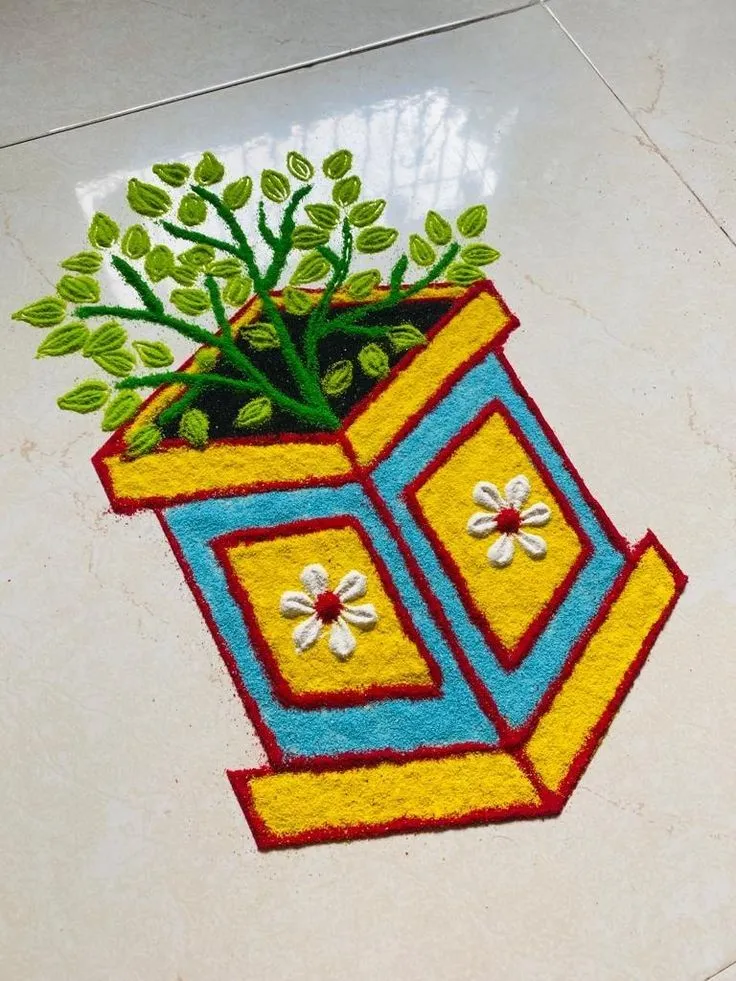
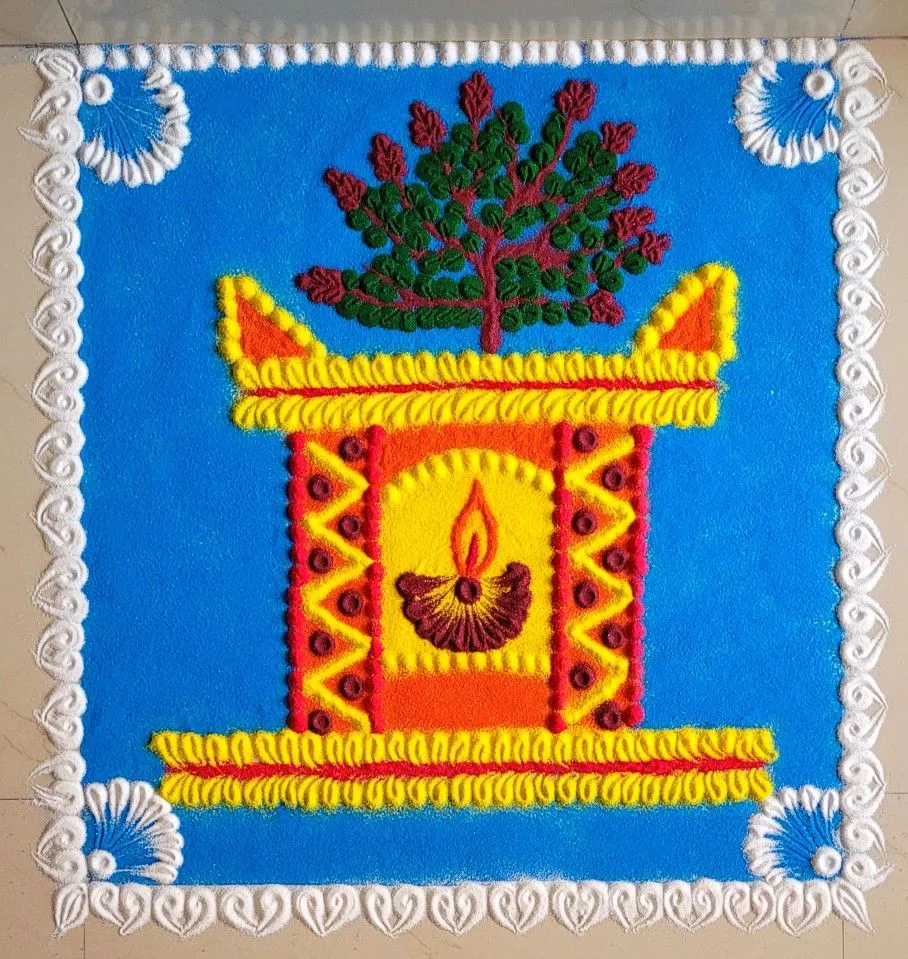
For those seeking Tulsi Vivah Rangoli Simple yet impactful designs, geometric minimalism offers clean lines, bold shapes, and limited color palettes. Squares, triangles, and diamond shapes can be arranged in patterns that create visual movement without overwhelming complexity. This style suits modern home aesthetics while honoring traditional practices.
The Rainbow Gradient
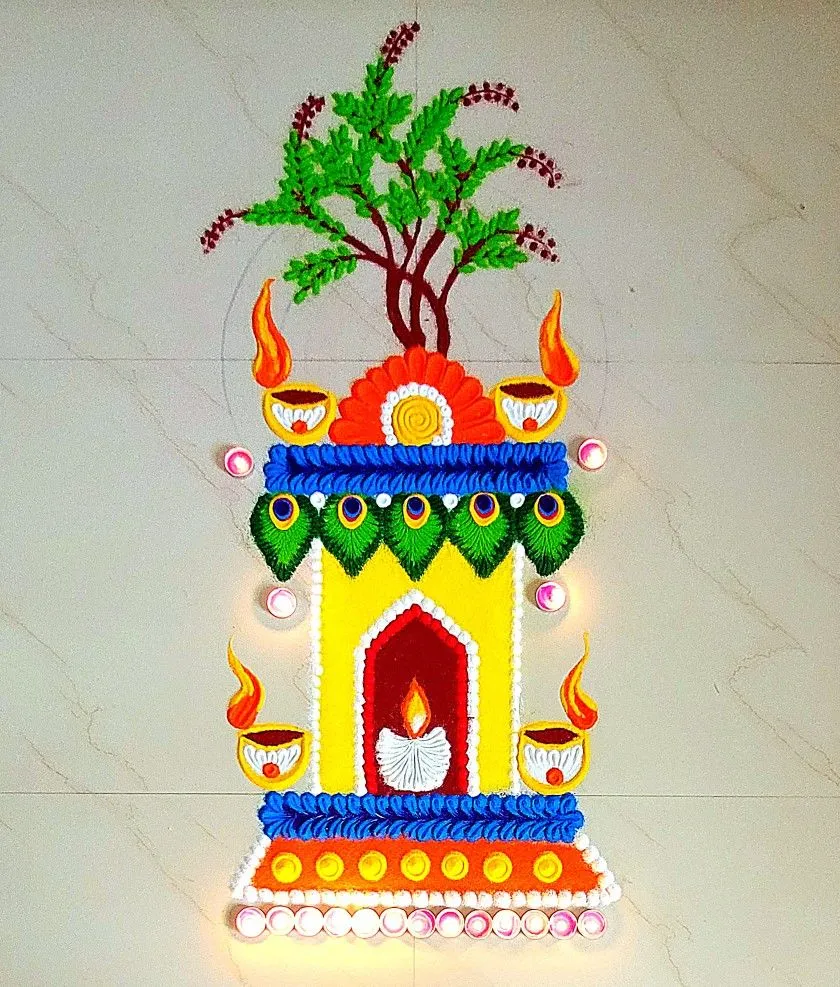
This Easy Tulsi Vivah Rangoli approach uses color gradients flowing from one hue to another, creating a sunset or rainbow effect. Concentric circles or flowing patterns filled with gradual color transitions produce stunning visual effects that seem complex but are surprisingly achievable for beginners with patience.
Contemporary Fusion Design
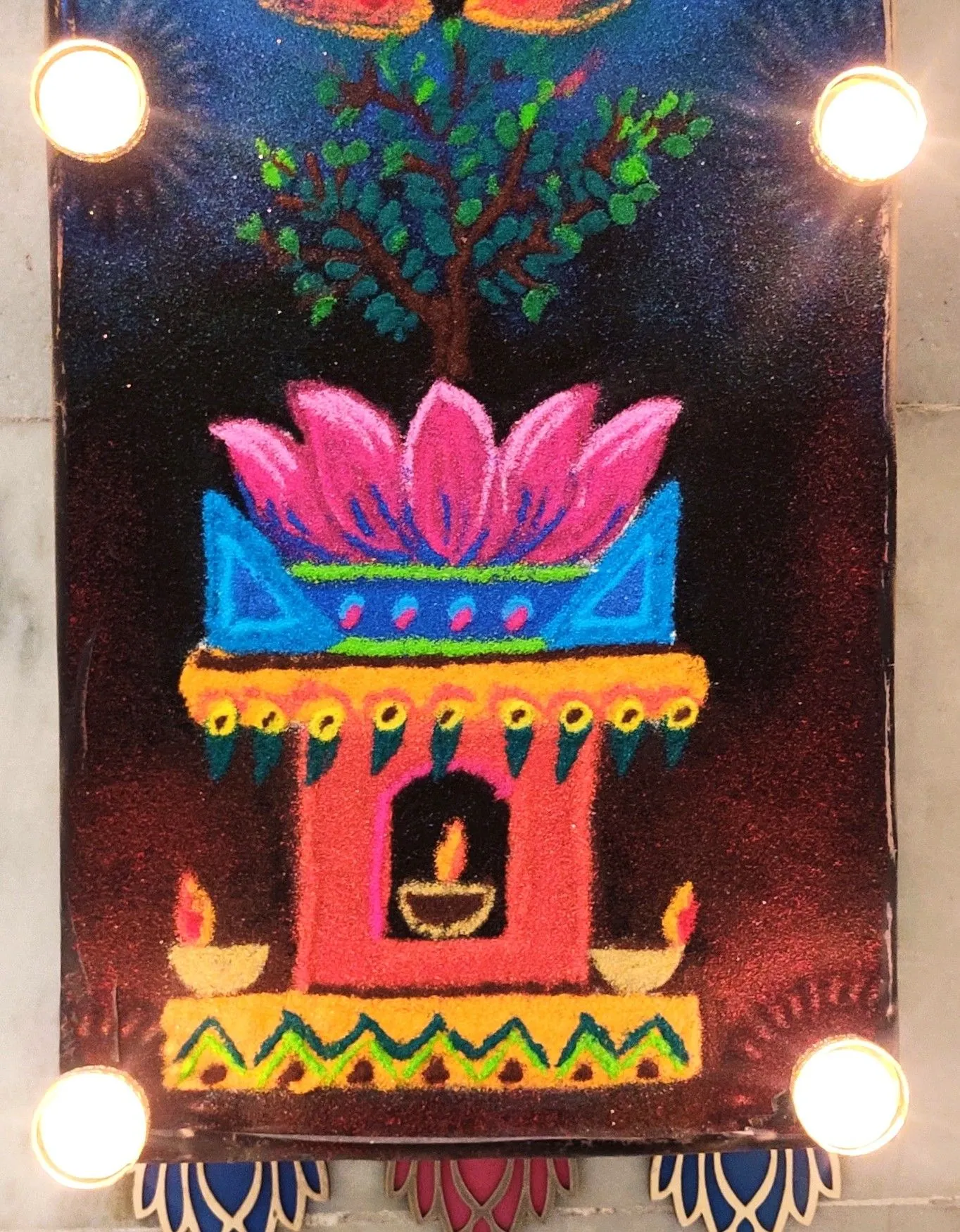
Blending traditional motifs with modern artistic elements, this Small Simple Tulsi Vivah Rangoli style incorporates abstract shapes, experimental color combinations, and unconventional materials like glitter and metallic paints. This approach celebrates cultural evolution while maintaining respect for traditional values.
Read More:
- Back Hand Mehndi Design
- Front Hand Simple Mehndi Design
- Simple Mehndi Design
- Easy Mehndi Design
- Karva Chauth Mehandi Design
- Arabic Mehandi Design
- Full Hand Mehandi Design
- Tikki Mehndi Design
- Bail Mehndi Design
- Khafif Mehndi Design
- Rabeeca Khan Mehndi Design
- Kashees Mehndi Design
- Foot Mehandi Design
- Mehandi Design For Kids
- Circle Mehndi Design
- Bel Mehndi Design
Conclusion
Tulsi Vivah Rangoli represents far more than decorative floor art—it’s a living bridge connecting ancient traditions to modern celebrations, blending spirituality with creativity, and fostering family bonds through shared artistic endeavor. Whether you’re creating your first Tulsi Vivah Rangoli Simple design or your twentieth New Tulsi Vivah Rangoli masterpiece, the journey matters as much as the destination. The festival of Tulsi Vivah celebrates the sacred plant that graces countless Indian homes, and the rangoli art form honors this reverence through visual expression. As we celebrate in 2026, these traditions remind us of cultural continuity, environmental consciousness, and the joy of creating beauty with our own hands. From Easy Tulsi Vivah Rangoli patterns suitable for beginners to elaborate Special Tulsi Vivah Rangoli designs that challenge experienced artists, there’s a place for everyone in this celebration.
Explore more fun blogs at Masteryhairstyle
