
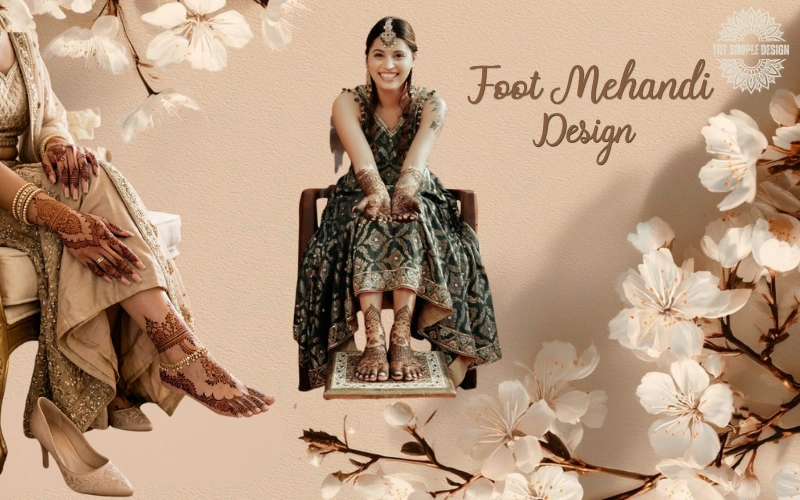
The best Foot Mehandi Design for you depends on the occasion, your comfort with wearing shoes soon after, and whether you want a bold bridal statement or a quick, pretty pattern for a festival — and 2026 is genuinely pushing this category into the spotlight after years of hands getting all the attention.
Quick Stats Table – Foot Mehandi Design at a Glance
| Detail | Information |
|---|---|
| Core 2026 trend | Lotus-centric foot designs with lily pads, water ripples, and shaded petals |
| Also trending | Ankle anklet patterns, toe-ring henna, vines climbing the foot |
| Best time to apply | 1–2 days before your event |
| Average application time | 30–90 minutes depending on style |
| Average stain darkening time | 24–48 hours after removal |
| Popular occasions | Weddings, Karva Chauth, Teej, Eid, festive guest attendance |
| Global henna market (reported) | Projected to reach $951 million by 2033, growing roughly 7.56% a year |
Foot Mehandi Design Simple
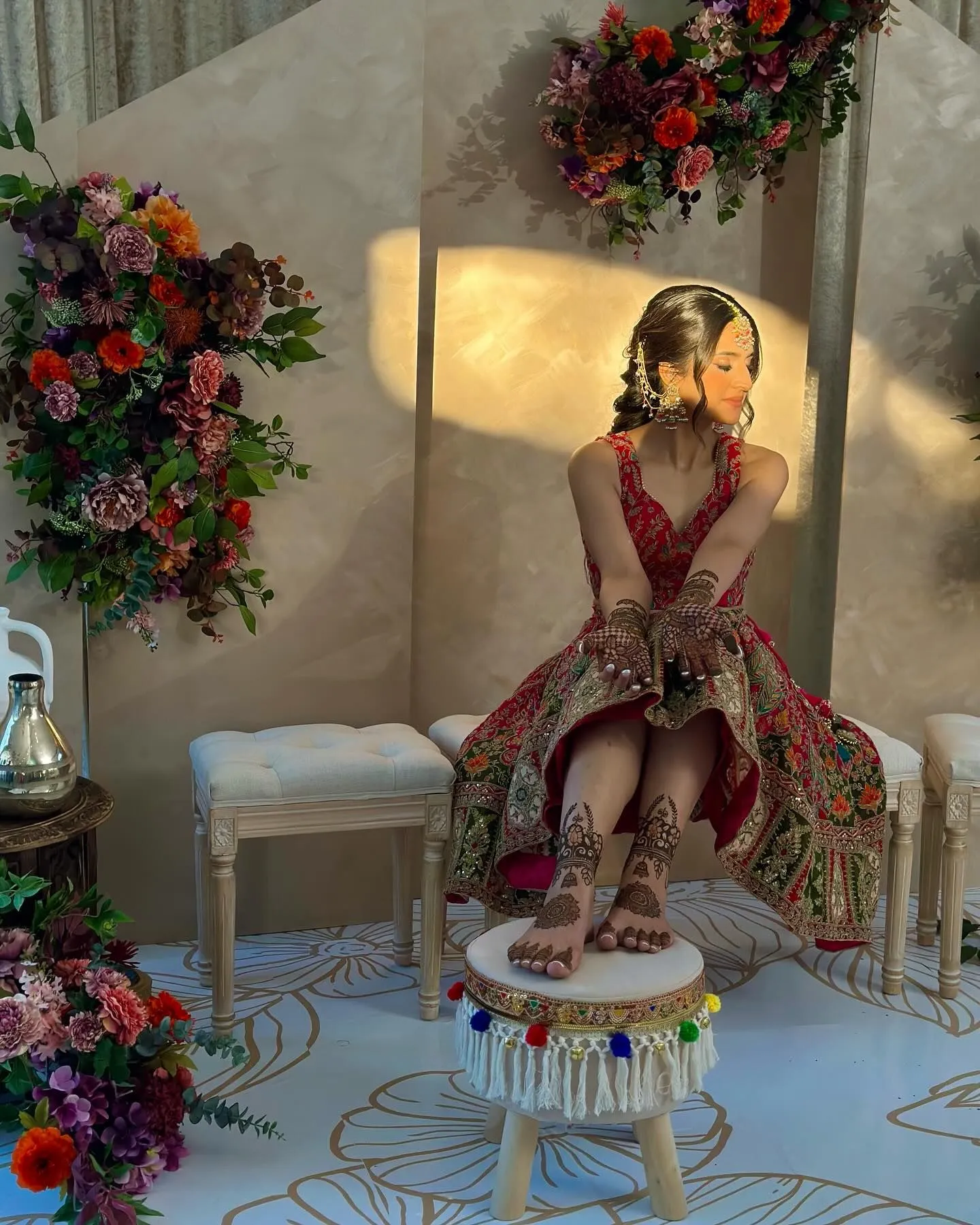
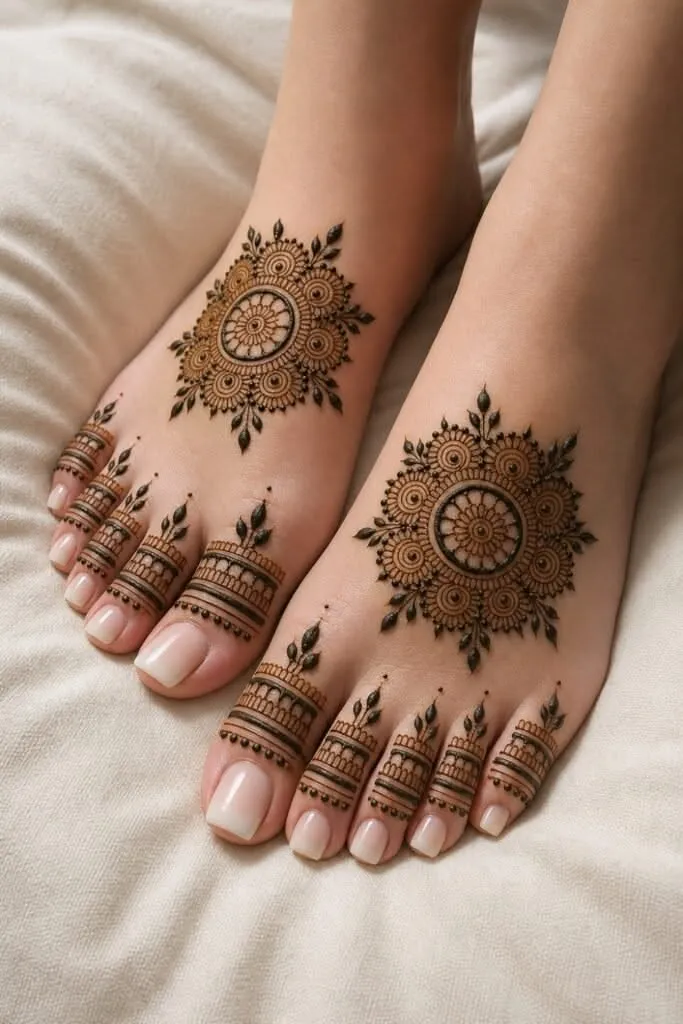
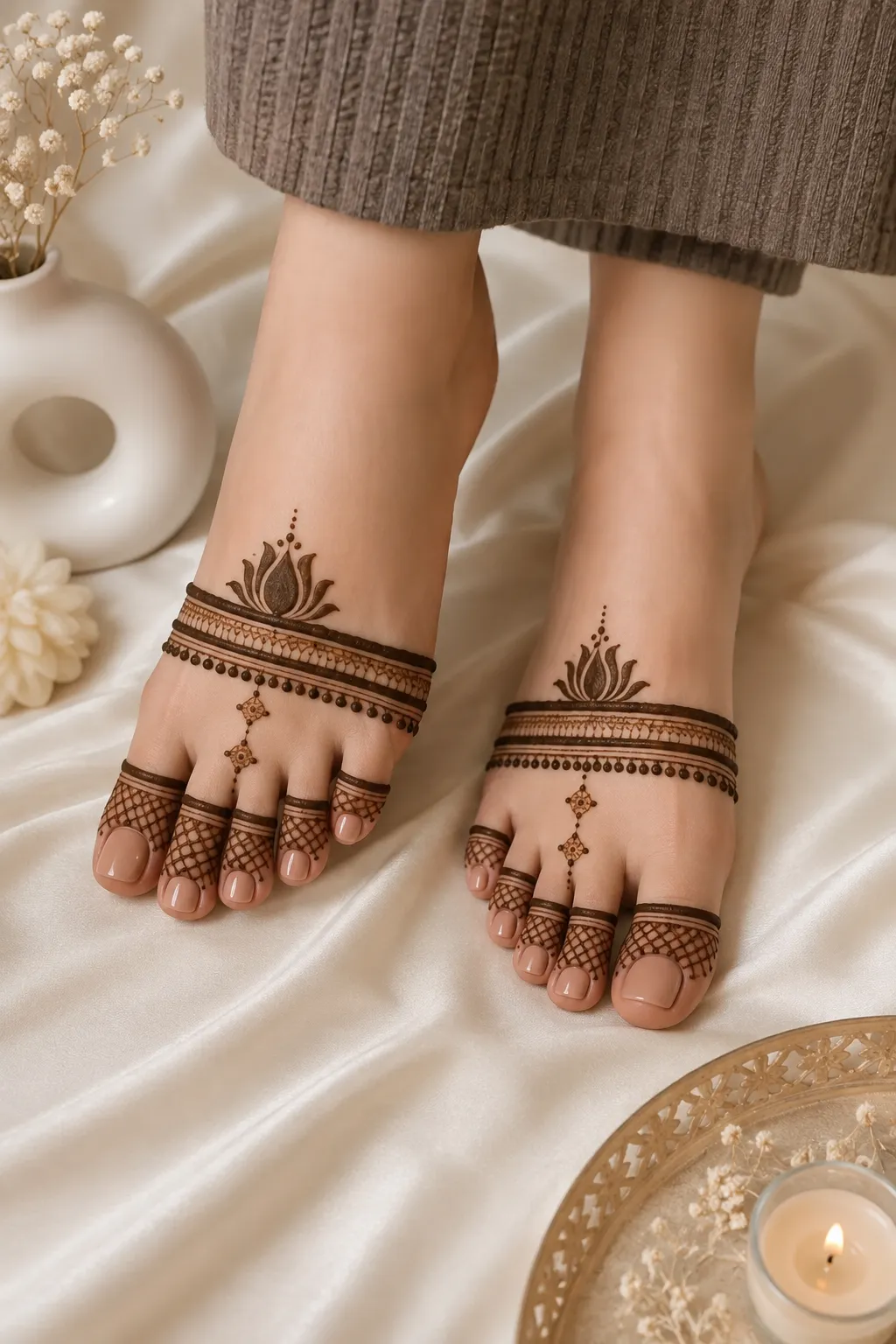
Not everyone wants an elaborate foot pattern, and that is exactly where a Foot Mehandi Design Simple approach earns its popularity. Think a single thin vine tracing the top of the foot, one small mandala near the ankle, or a delicate crescent tucked behind the toes — clean, quiet, and genuinely elegant without demanding hours in a chair. This minimalist direction is one of 2026’s defining moods across mehandi generally, described by artists as “restraint and cleanliness” replacing the older instinct to fill every inch of skin. It suits casual events, school functions, or simply someone who wants to try henna without committing to a huge design. Simple does not mean boring here; it means confident, intentional, and easy to wear all day without feeling heavy underfoot.
Bridal Foot Mehandi Design
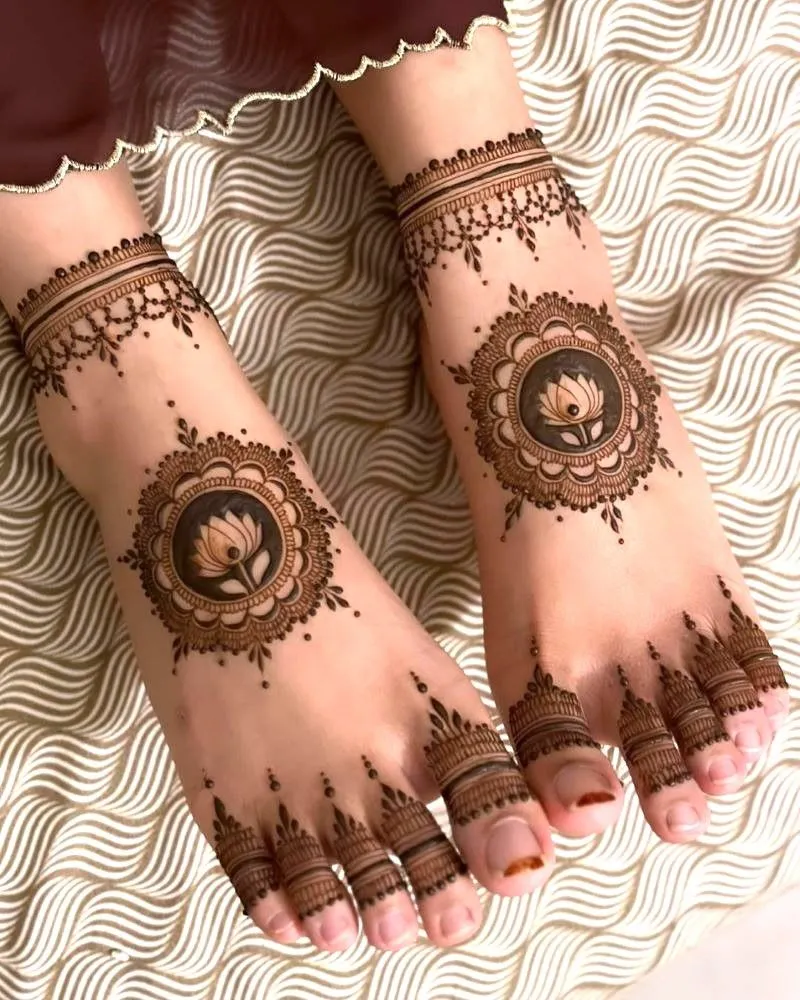
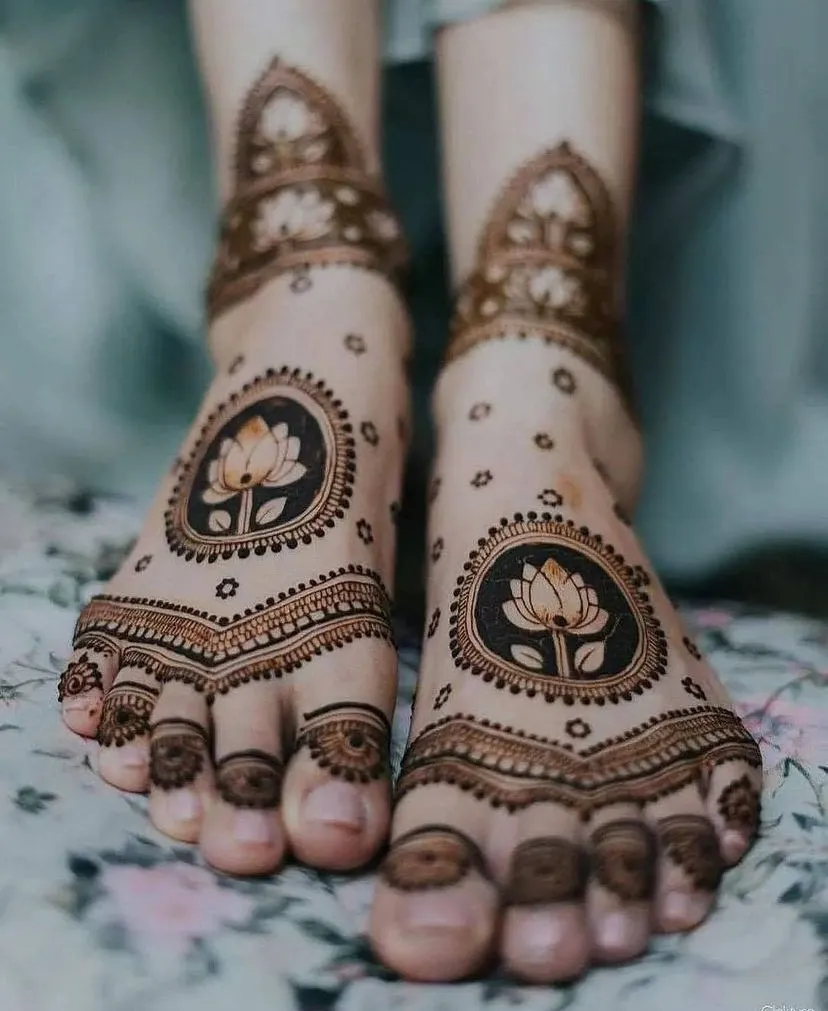
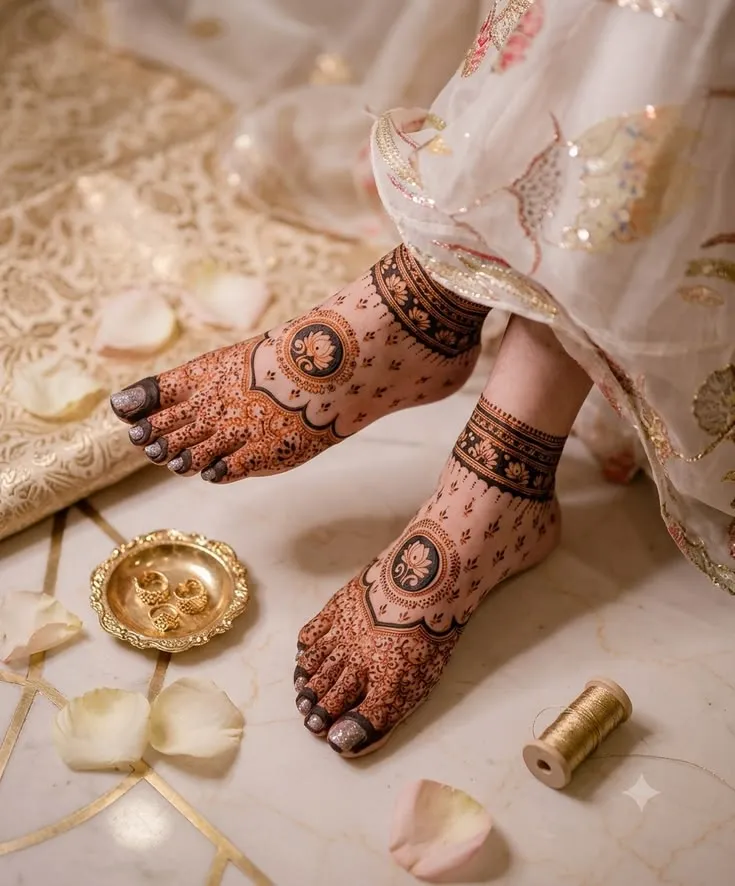
For brides who still want real drama, a Bridal Foot Mehandi Design in 2026 has moved toward lotus-centric compositions paired with lily pads, water ripples, and even tiny fish motifs woven into the pattern. Shading techniques are a big part of this look, with darker petals at the base gradually lightening toward the tips for a genuinely realistic, layered effect. Full coverage from toes to ankle, sometimes extending further up the leg, remains popular for the wedding day itself, especially alongside a matching full-hand bridal pattern. This kind of design takes real patience from both the bride and the artist, often ninety minutes or more per foot, but it photographs beautifully under mandap lighting and pairs wonderfully with traditional bridal jewellery like anklets and toe rings.
Foot Mehandi Design Easy
If you are short on time but still want your feet to look festive, a Foot Mehandi Design Easy enough to finish in under thirty minutes is absolutely achievable. Simple flowing vine trails along one side of the foot, a row of dots and small circles, or a single paisley motif near the ankle are consistently named among the easiest patterns for beginners to attempt, even at home. These designs are forgiving if your hand shakes slightly or your artist is working quickly before a function starts. They also dry faster given the smaller surface area covered, which matters if you still need to get into shoes or socks soon after. For last-minute festive prep, this is genuinely the most practical category on this whole list.
Arabic Foot Mehandi Design
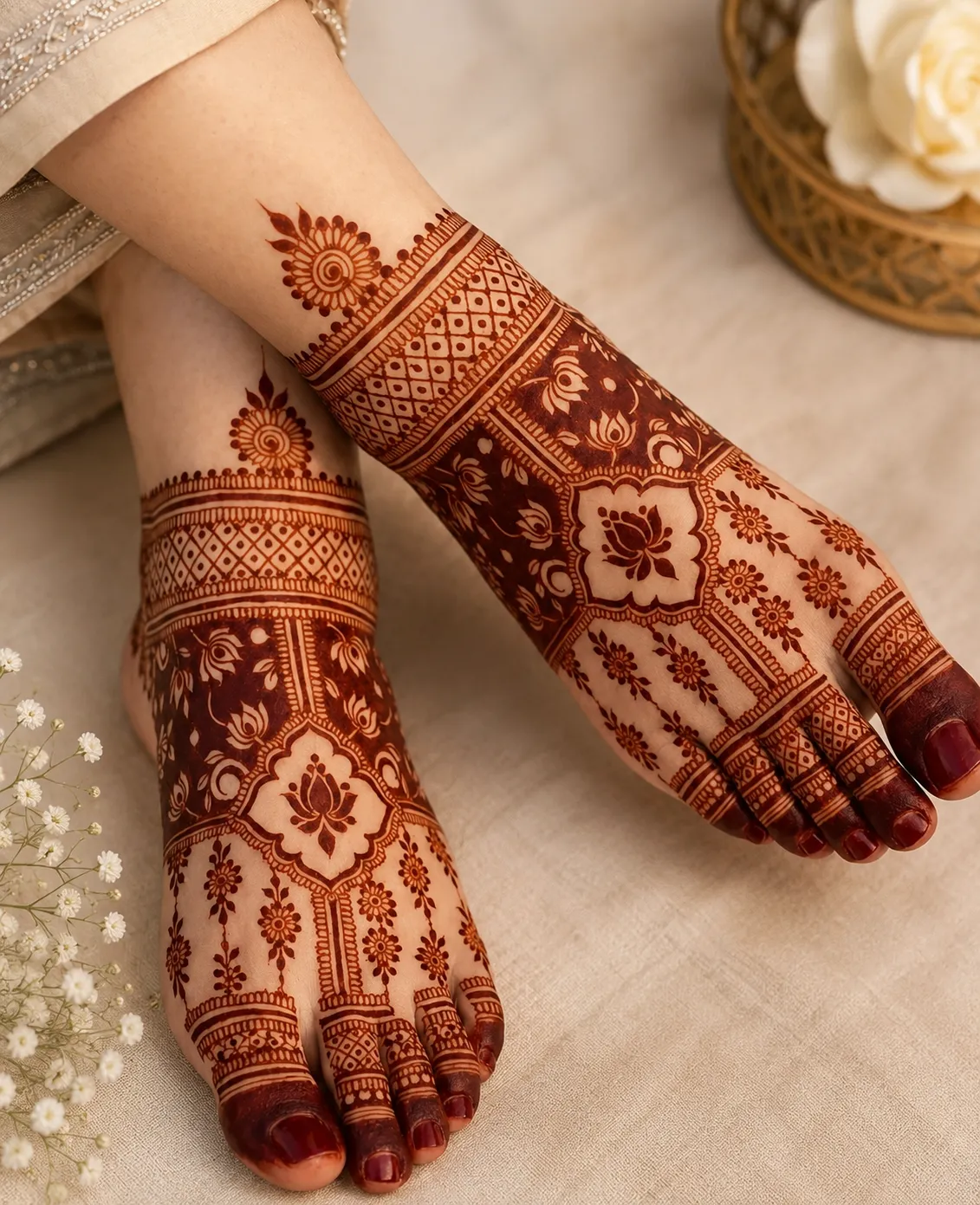
An Arabic Foot Mehandi Design leans into everything that makes Arabic-style henna distinctive: bold florals, flowing vines, and generous negative space rather than dense, filled-in coverage. On the foot specifically, this often means large blooms anchoring the design near the ankle, connected by sweeping leaf trails that leave plenty of bare skin showing between motifs. This style has genuinely surged in search interest, with “Arabic mehendi designs” consistently showing higher search volumes than generic hand-design searches through 2025 and into 2026, according to trend-tracking data. It works particularly well on feet because the open spacing keeps the design from feeling heavy or cluttered, even when applied alongside sandals or anklets. For anyone wanting a bold look without the multi-hour bridal commitment, this remains one of the most requested categories among foot henna clients.
Stylish Foot Mehandi Design
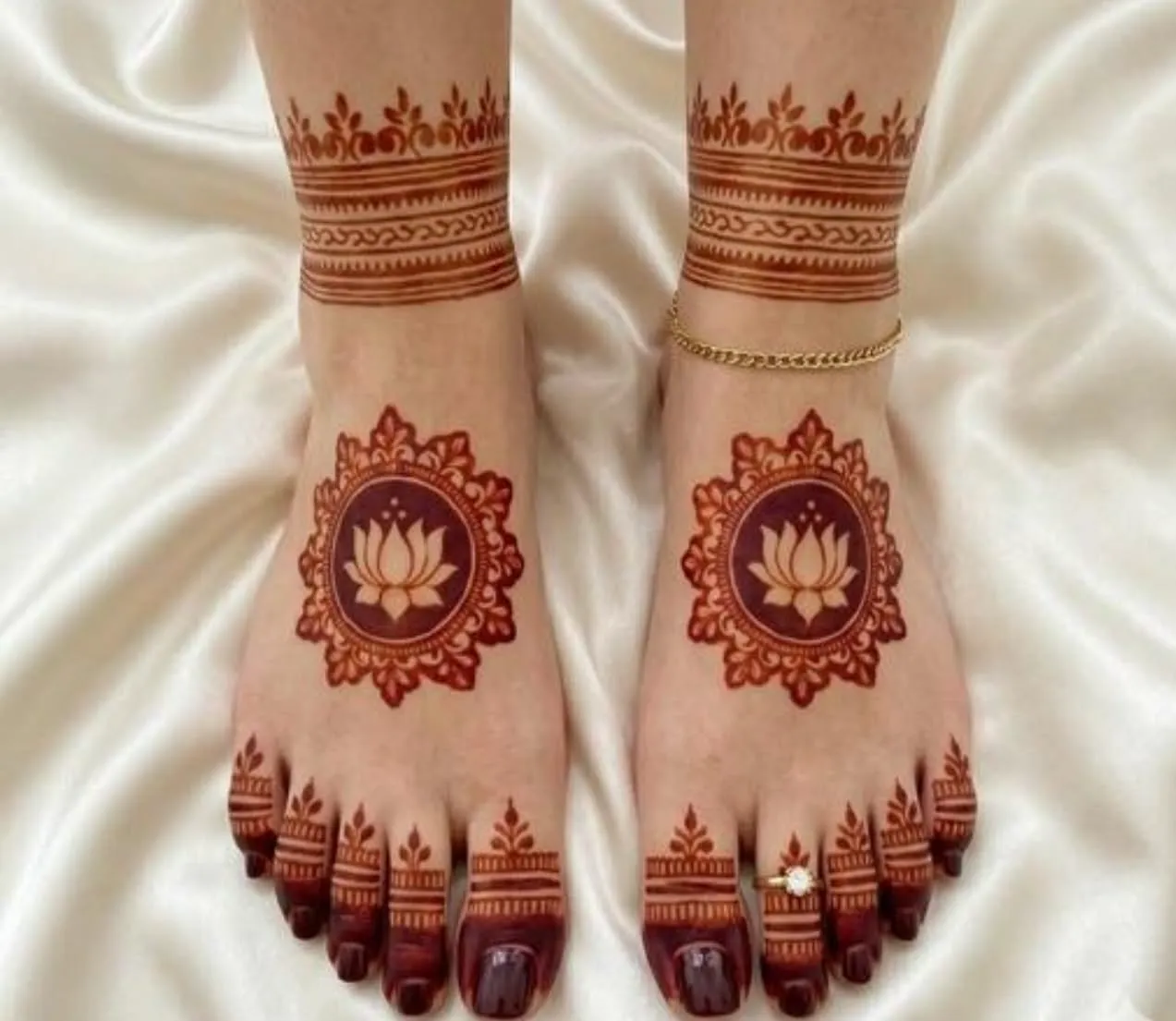
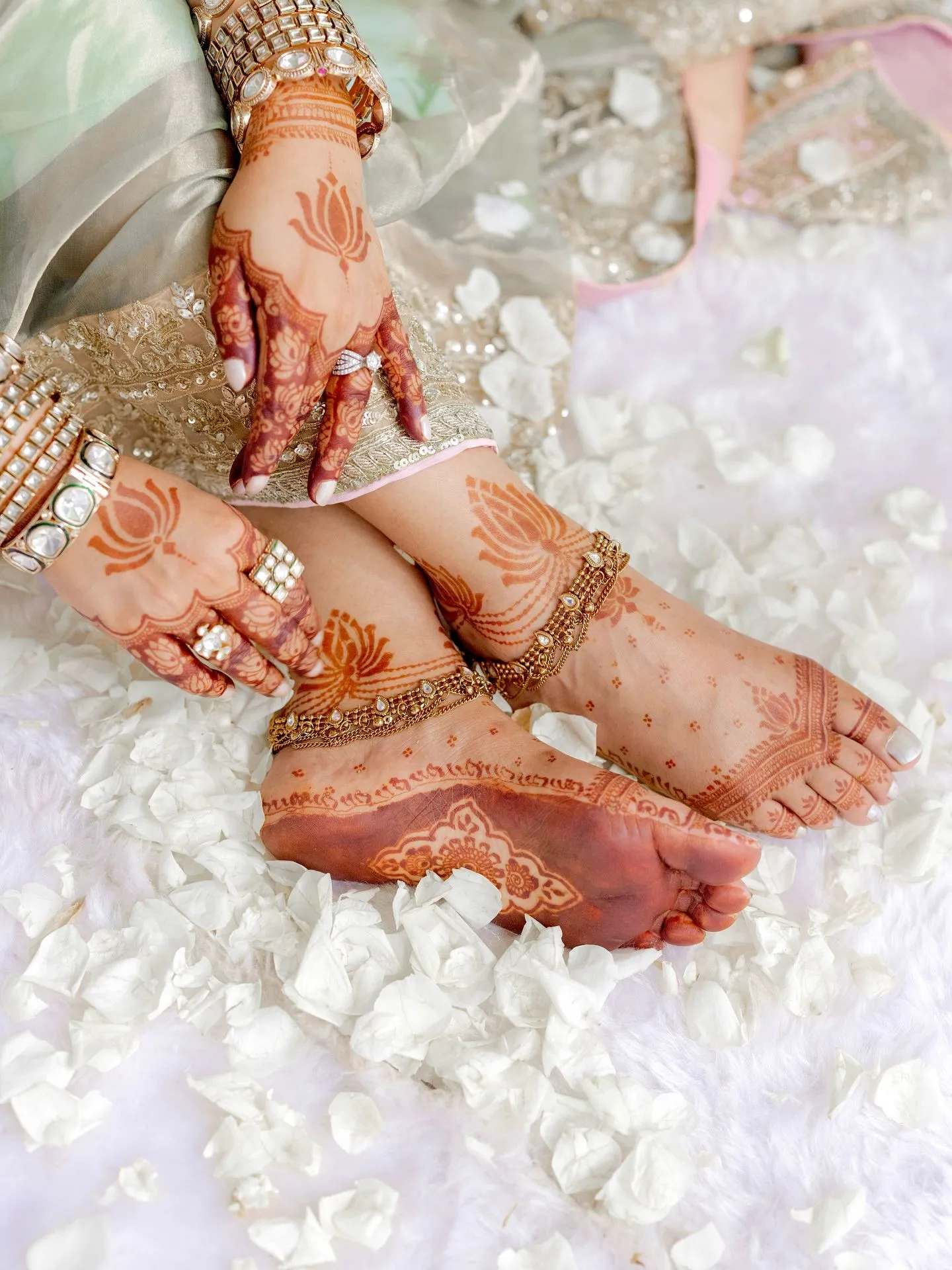
A genuinely Stylish Foot Mehandi Design in 2026 often means fusion — blending Arabic boldness with fine Indian latticework, or mixing geometric precision with soft floral shapes. Some artists are layering colour too, applying a translucent, darker tint over select sections after the base henna dries, creating a striking tonal contrast between warm maroon fill and near-black accent zones. Geometric fusion, where mandala-style precision meets flowing Arabic lines, is a specific technique named repeatedly across 2026 trend coverage as a standout choice for brides who do not want to fit neatly into one traditional style. This category rewards a skilled, experienced artist, since the contrast and precision genuinely depend on clean linework. If you want something that looks intentionally designed rather than default, this is the direction to ask your artist about.
Beautiful Foot Mehandi Design
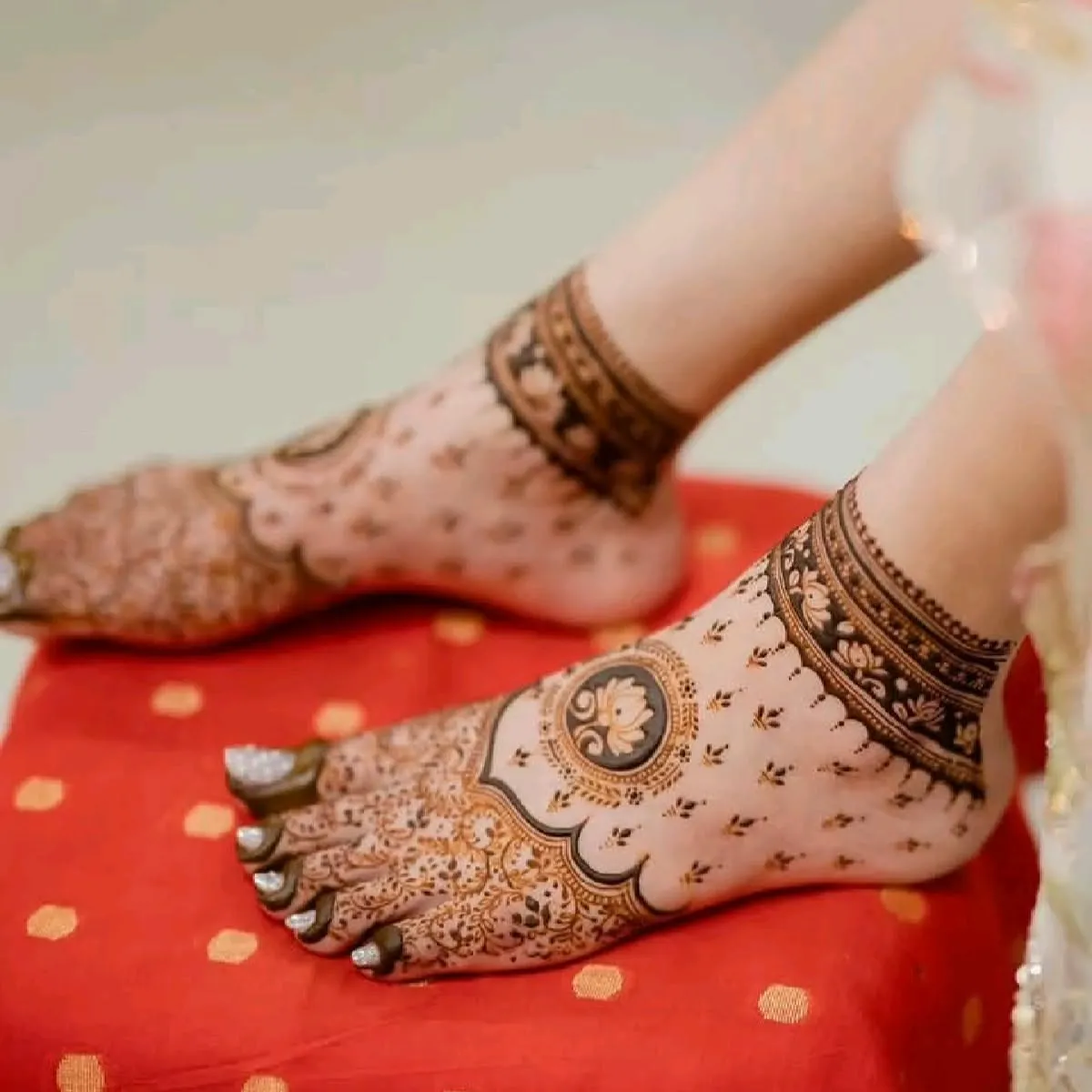
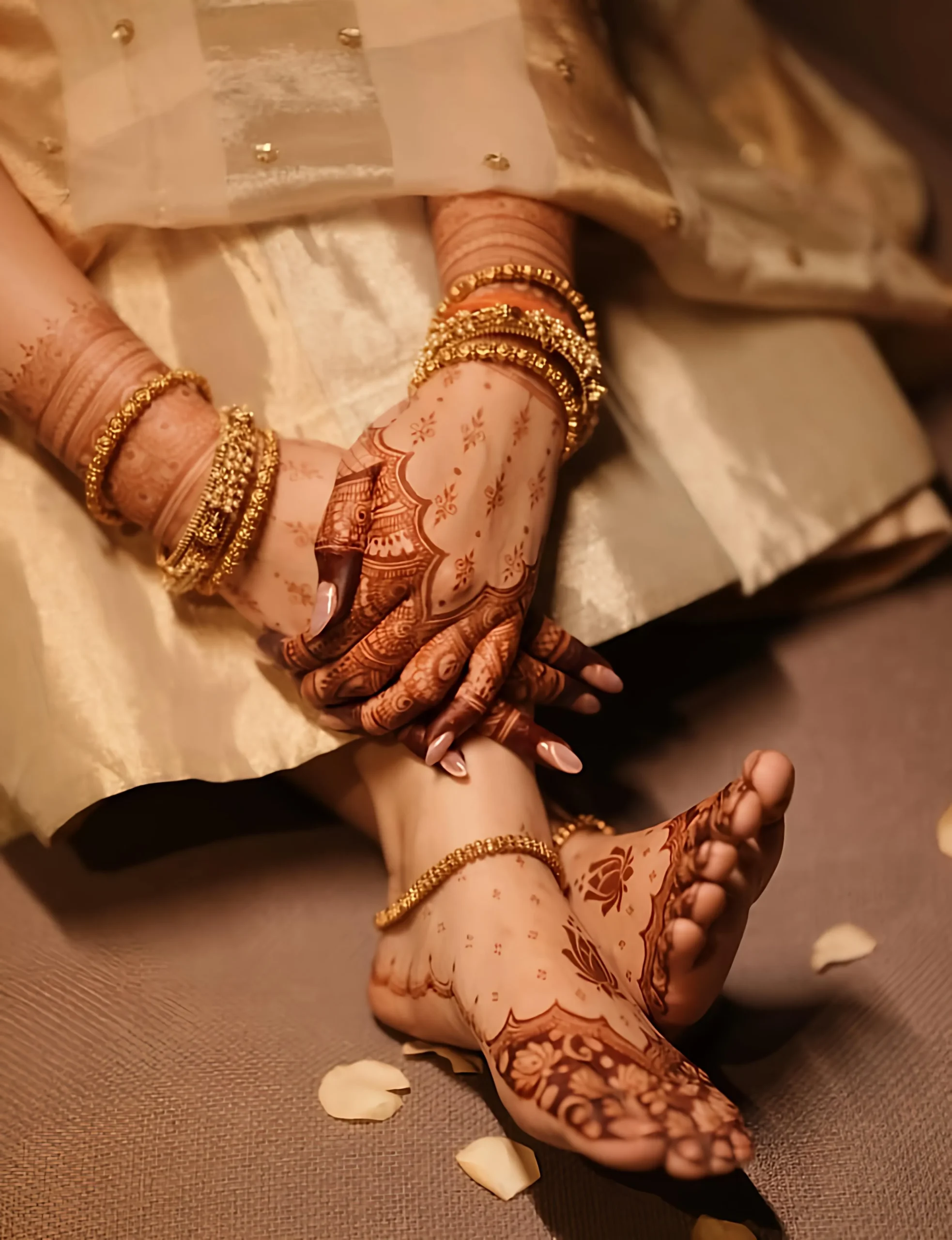
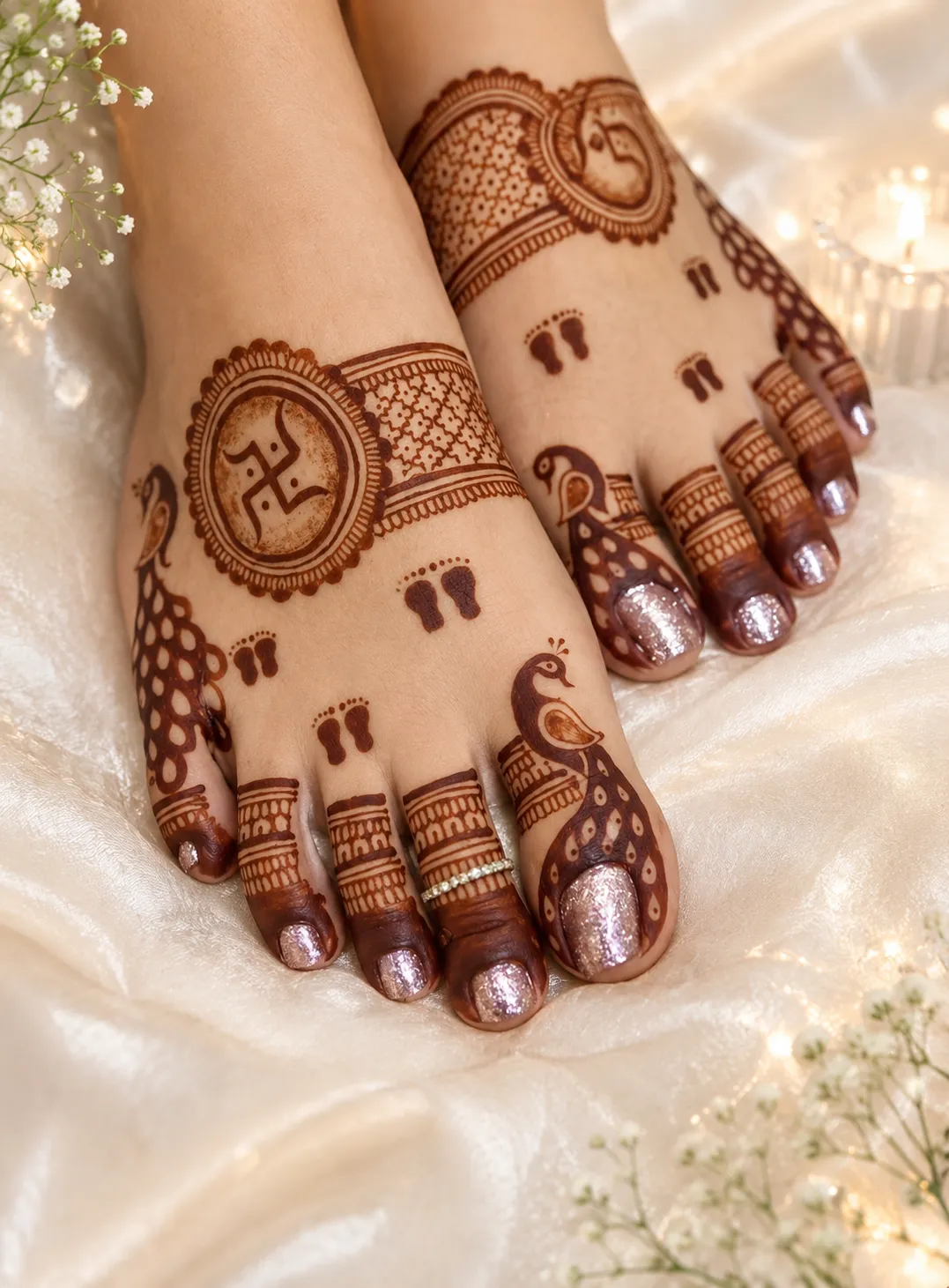
Sometimes the goal is simpler than chasing a specific trend — you just want a genuinely Beautiful Foot Mehandi Design that photographs well and feels special to wear. Peacock motifs remain a beloved, classic choice for feet, often incorporated with geometric body fills for a slightly modern twist rather than the purely traditional version. Gol Tikki style, featuring round circular motifs connected by fine dot-work, also continues to hold its charm for religious functions and family mehfils, giving a symmetrical, balanced look that never really goes out of style. Beauty here often comes down to proportion and placement rather than complexity — a well-spaced, confidently drawn pattern frequently outshines a rushed, overly dense one. Talking to your artist about your foot shape and how the design will sit once you are standing or walking genuinely changes the final result.
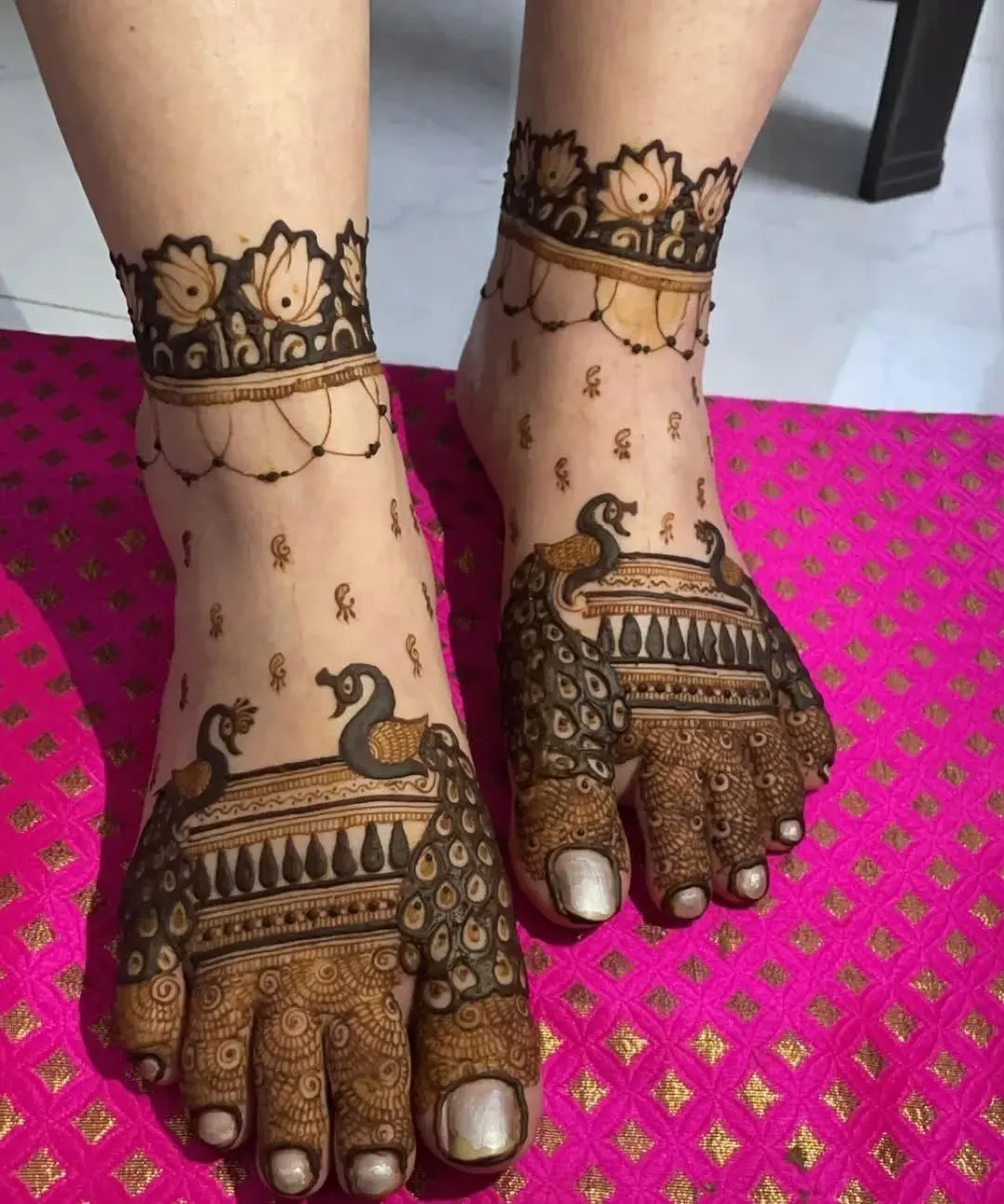
Latest Foot Mehandi Design
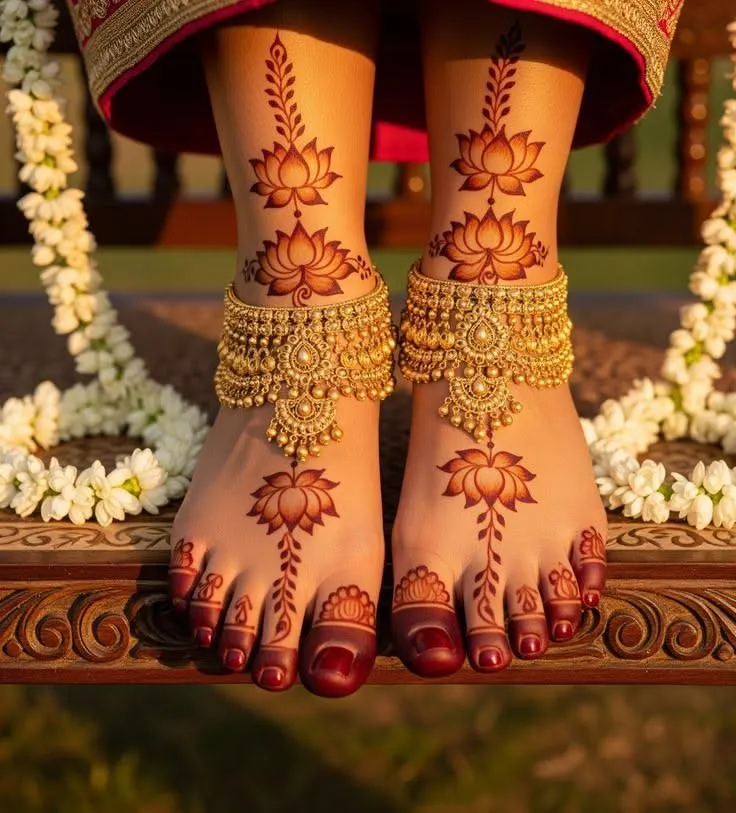
The genuinely Latest Foot Mehandi Design trends for 2026 circle back to one consistent theme across nearly every source covering this season: intentional restraint over maximum coverage. Global search data through early 2026 shows bridal and Arabic mehendi searches peaking around key wedding-season months, with a particular spike in February 2025 that set the tone for the styles that followed. Foot and arm designs specifically are described as a genuinely growing category this year, no longer treated as a hand-design afterthought. Personalization is also a major thread running through 2026 coverage, with some brides working symbolic elements — meaningful dates, initials, or small motifs tied to their own story — into the design rather than picking a generic template. If there is one takeaway from this year’s trend data, it is that foot henna has earned its own creative spotlight.
Read More:
- Back Hand Mehndi Design
- Front Hand Simple Mehndi Design
- Simple Mehndi Design
- Easy Mehndi Design
- Karva Chauth Mehandi Design
- Arabic Mehandi Design
- Full Hand Mehandi Design
- Tikki Mehndi Design
- Bail Mehndi Design
- Khafif Mehndi Design
- Rabeeca Khan Mehndi Design
- Kashees Mehndi Design
Conclusion
Choosing the right Foot Mehandi Design really comes down to three honest questions: how much time do you have, how bold do you want the final look, and how soon do you need to get back into closed shoes. A simple or easy pattern suits a casual event or a last-minute festive touch-up. A bridal, lotus-centric design brings real drama for the wedding day itself. Arabic and stylish fusion options offer a strong middle ground for anyone wanting a beautiful, current look without a multi-hour commitment. Whichever direction you choose, applying it a day early, letting it dry fully, and giving it a little extra protection from friction will make the biggest difference in how stunning it still looks days later.
Explore more fun blogs at Masteryhairstyle
