
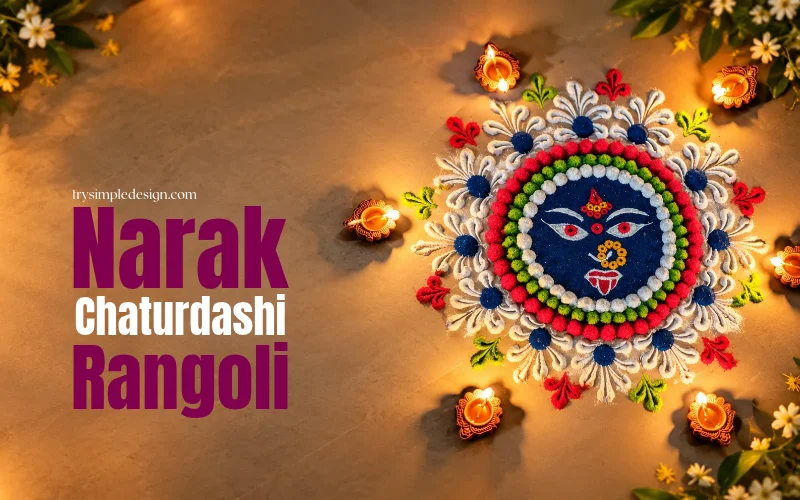
Narak Chaturdashi Rangoli is a decorative art created with colored powders, flower petals, rice flour, or other suitable materials to celebrate Narak Chaturdashi. People often make rangoli near entrances, courtyards, and prayer areas to give their homes a festive appearance.
Narak Chaturdashi, also known as Choti Diwali in many parts of India, falls during the Diwali festival period. Traditions vary by region, but the day is commonly associated with the story of Lord Krishna’s victory over the demon Narakasura.
Quick Facts About Narak Chaturdashi Rangoli
| Detail | Information |
|---|---|
| Festival | Narak Chaturdashi |
| Common alternative name | Choti Diwali |
| Main decoration | Rangoli |
| Popular materials | Colored powder, flower petals, rice flour |
| Common motifs | Diyas, lotus flowers, dots, geometric patterns |
| Best decorating areas | Entrance, courtyard, veranda, prayer area |
| Beginner-friendly option | Small floral or dotted rangoli |
| Popular colors | Red, yellow, orange, green, white, and pink |
| Eco-friendly choices | Flower petals, rice flour, and natural colors |
| Article updated | October 30, 2026 |
Easy Narak Chaturdashi Rangoli
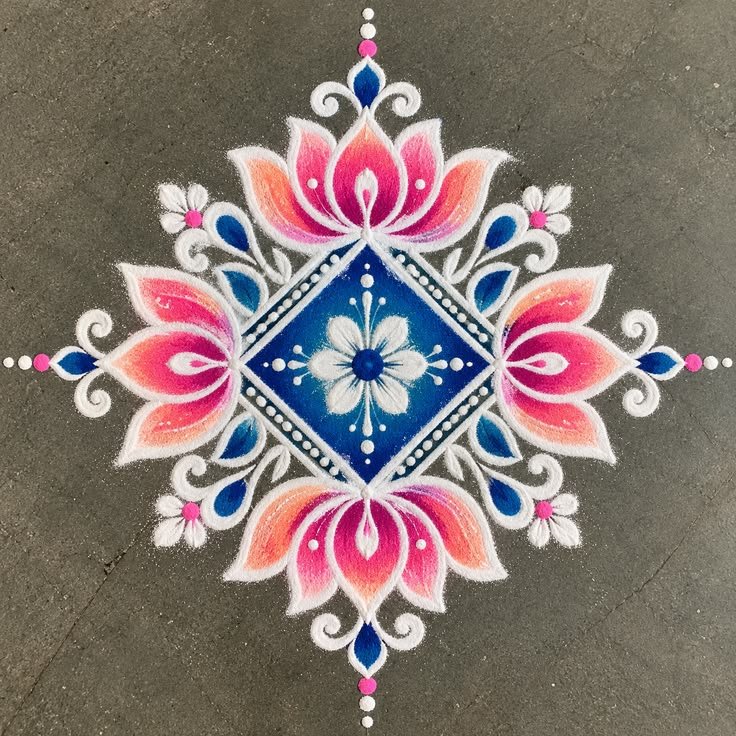
An Easy Narak Chaturdashi Rangoli design is perfect for people who want beautiful decorations without spending hours on the floor. You can start with a circle, add petals around it, and fill the spaces with two or three bright colors.
A simple diya in the center can make the pattern look more festive. You can also use dots to create a balanced design without drawing complicated outlines.
Simple Narak Chaturdashi Rangoli
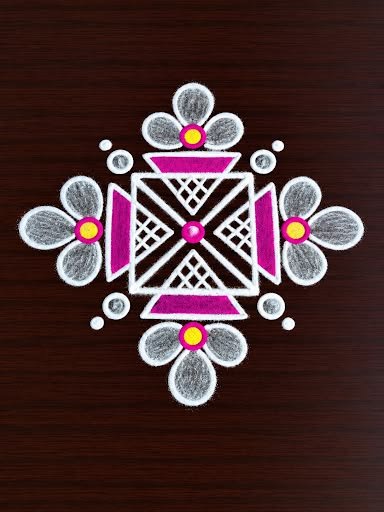
A Simple Narak Chaturdashi Rangoli uses basic shapes and a limited color palette to create a neat festive decoration. It is a good choice when you have limited time or want to decorate several areas of your home.
Start by drawing a small circle or square. Add triangles, petals, or dots around the outline, then fill each section with a different color.
Narak Chaturdashi Rangoli Design With Diyas
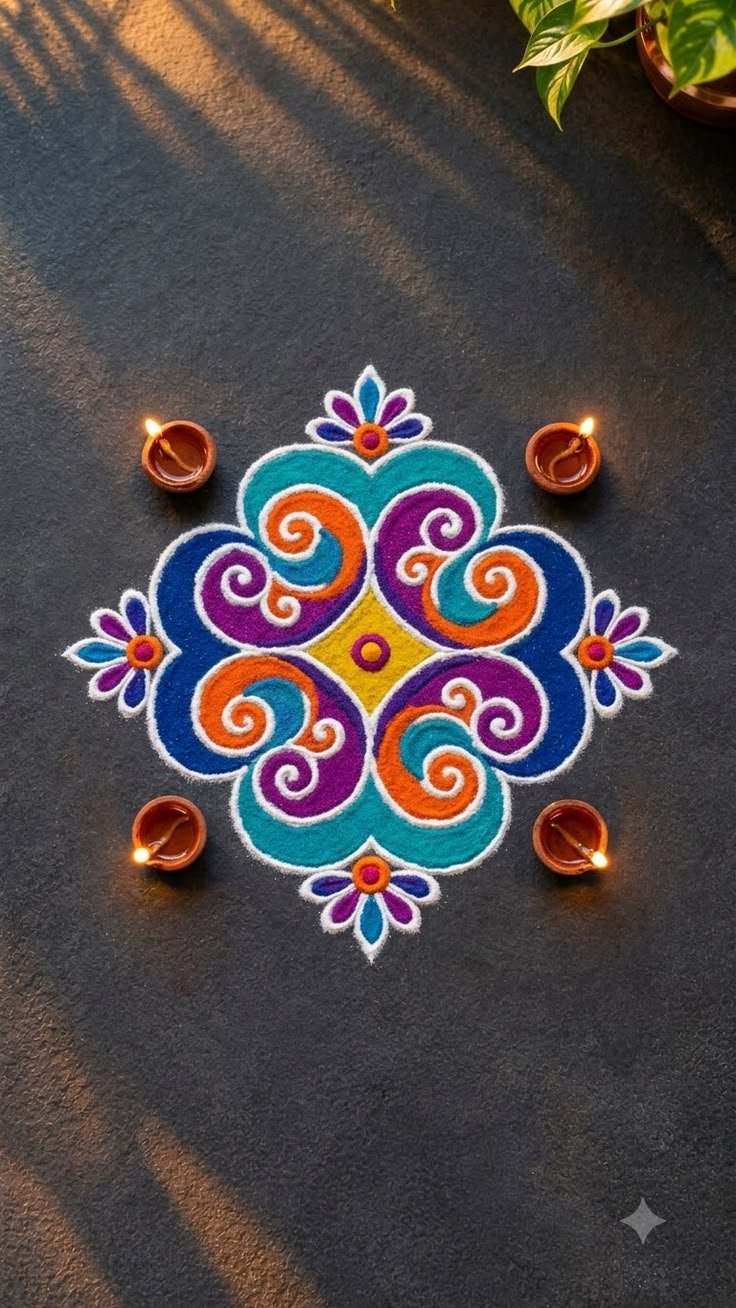
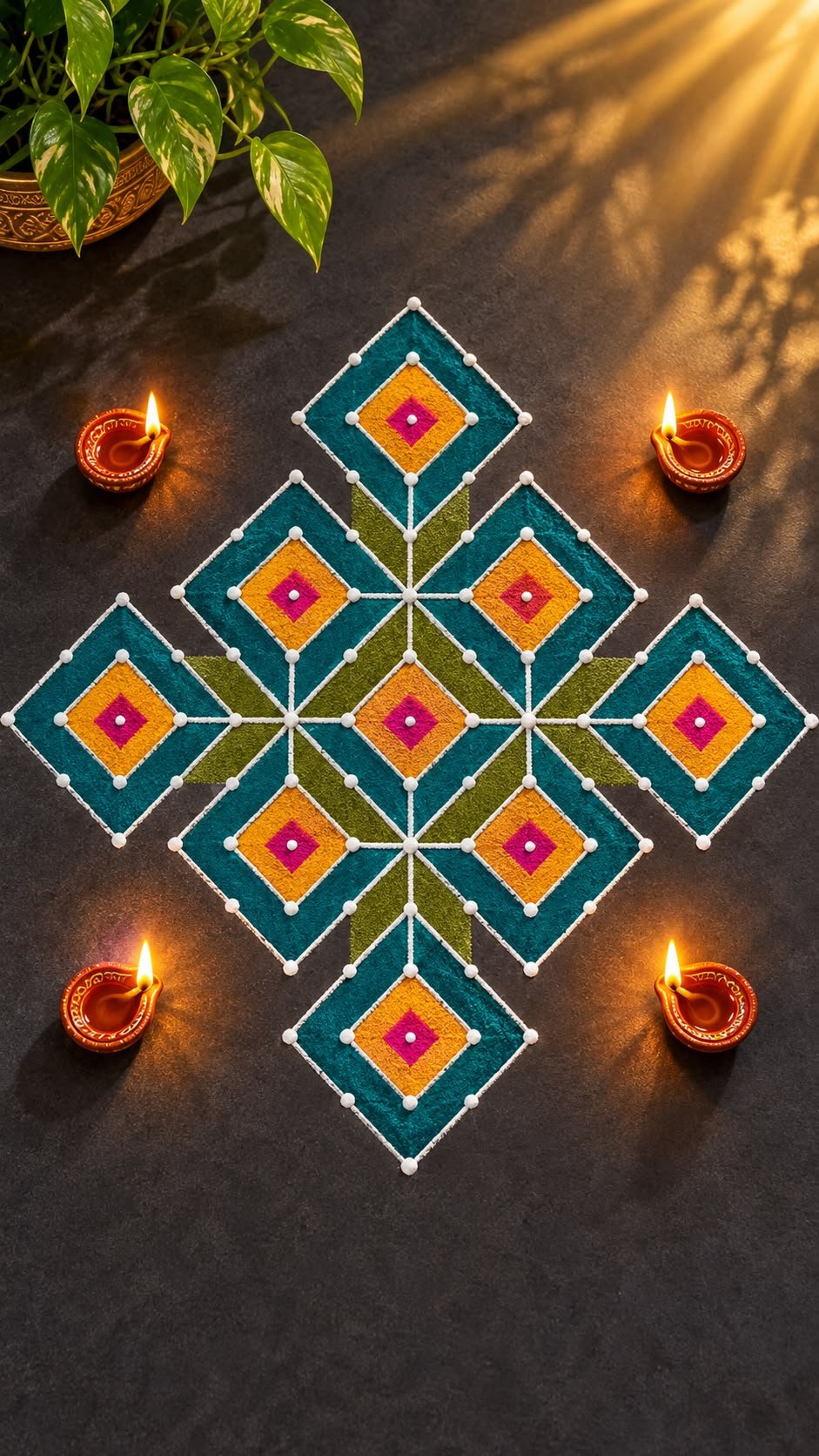
A Narak Chaturdashi Rangoli Design featuring diyas is a classic choice for Diwali celebrations. The diya represents light and is commonly associated with hope, positivity, and the victory of good over evil.
You can draw one large diya in the center and surround it with colorful petals. Another option is to create four small diyas facing different directions around a central flower.
Floral Narak Chaturdashi Rangoli
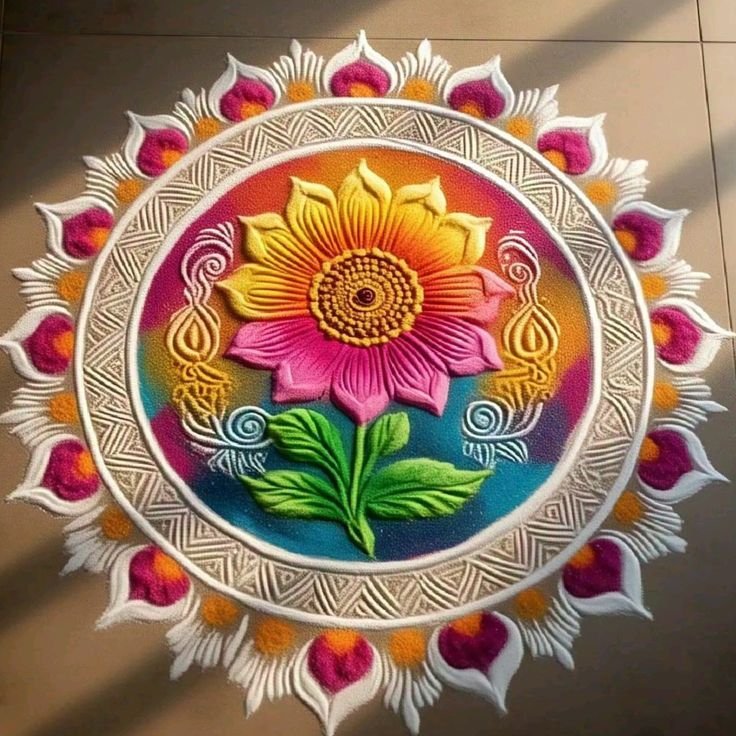
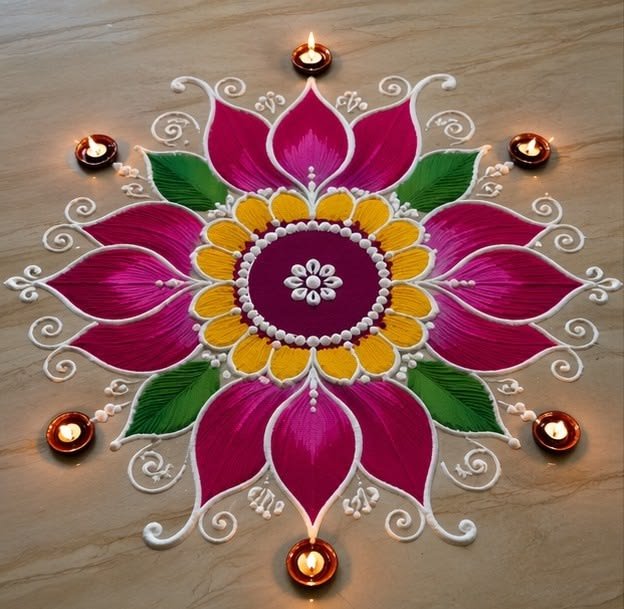
Flower rangoli is a beautiful choice for anyone who prefers natural materials over colored powder. You can use marigold petals, rose petals, and white flowers to create colorful patterns.
Arrange the petals in circles, spirals, or flower shapes. Place yellow petals around the outside and red or pink petals in the middle to create a striking contrast.
Kali Narak Chaturdashi Rangoli
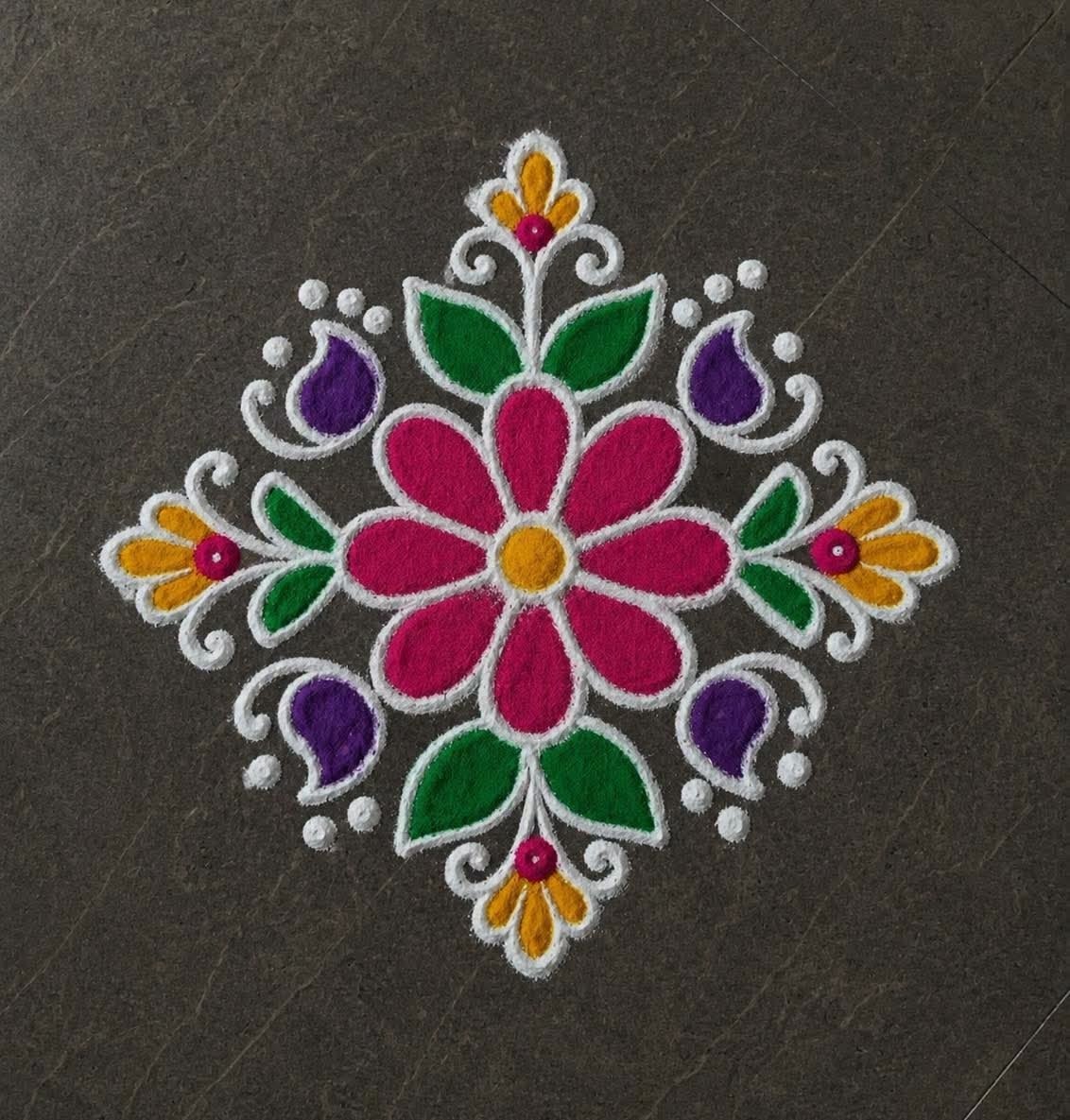
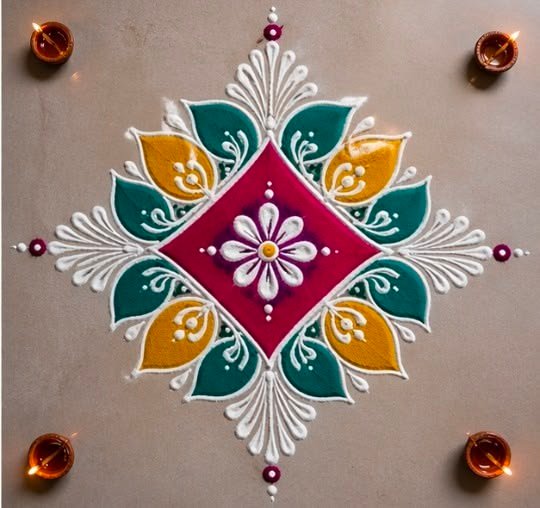
The phrase Kali Narak Chaturdashi Rangoli may refer to rangoli inspired by Kali Puja or regional observances associated with the same festival period. The traditions are not identical everywhere, so it is helpful to choose a design that suits your family’s customs.
For a festive pattern, you can use a lotus, diya, flower, or symmetrical geometric motif. Red, white, yellow, and orange are common choices for a bright appearance.
Happy Narak Chaturdashi Rangoli
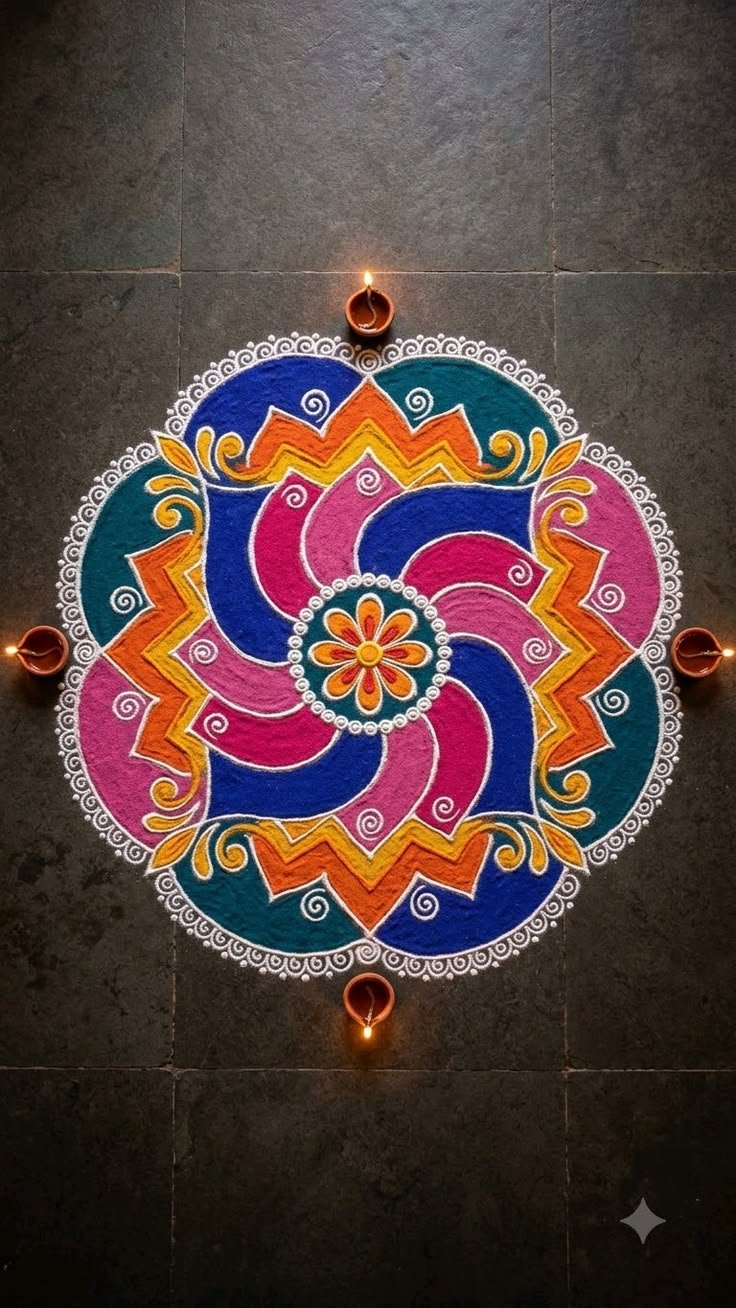
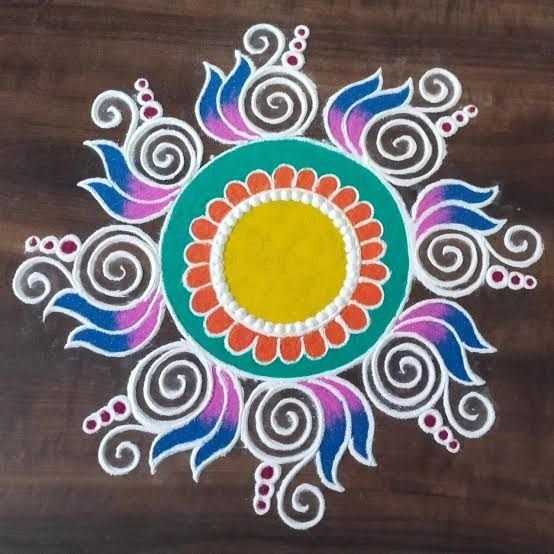
A Happy Narak Chaturdashi Rangoli design can combine festive colors with a simple greeting. This option works well for a family celebration or a decorated entrance where you want to welcome guests.
Create a border using dots or petals, then write a short greeting in the center if you are comfortable lettering with rangoli powder. You can also use a greeting card or decorative sign beside the rangoli instead of writing on the floor.
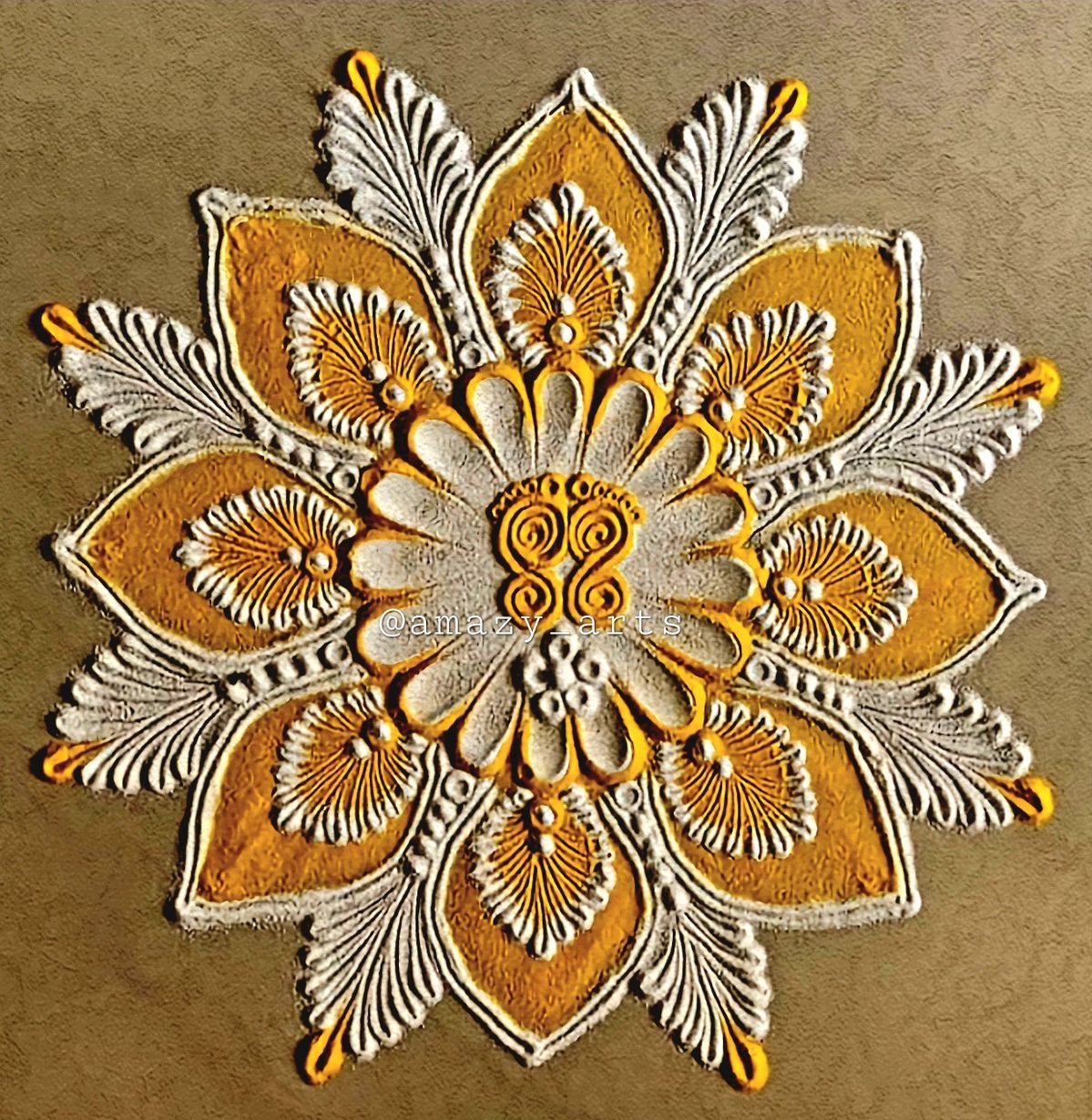
Narak Chaturdashi Rangoli Small
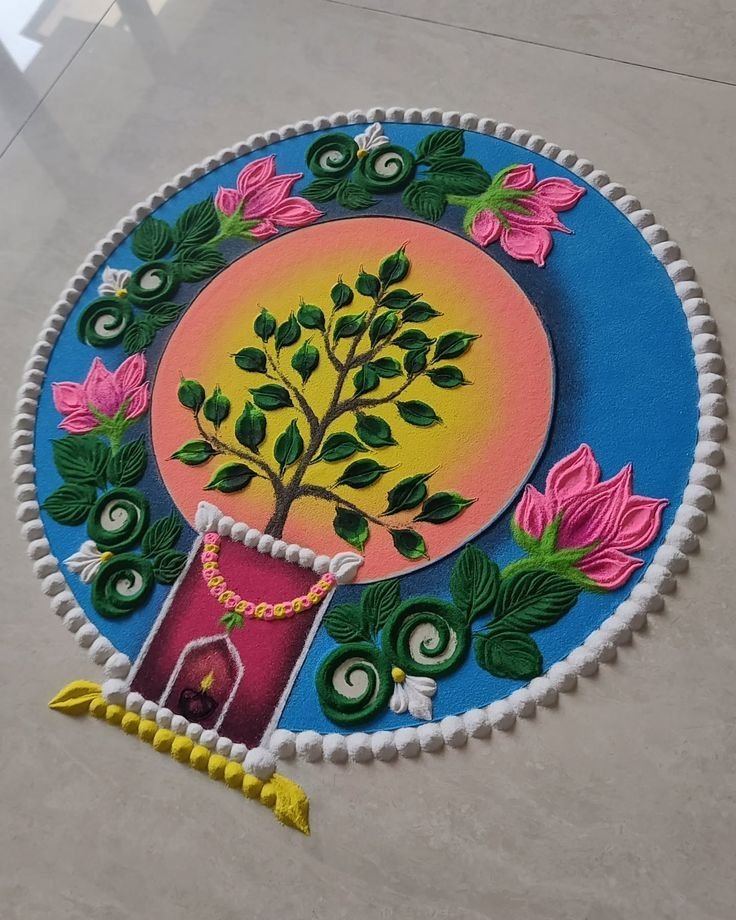
A Narak Chaturdashi Rangoli Small design is ideal for apartments, narrow entrances, balconies, and homes with limited floor space. A small design can still look festive when you use clear shapes and balanced colors.
Try a tiny lotus, a diya inside a circle, or four flowers arranged around a central dot. You can also make a row of small floral patterns beside the doorway.
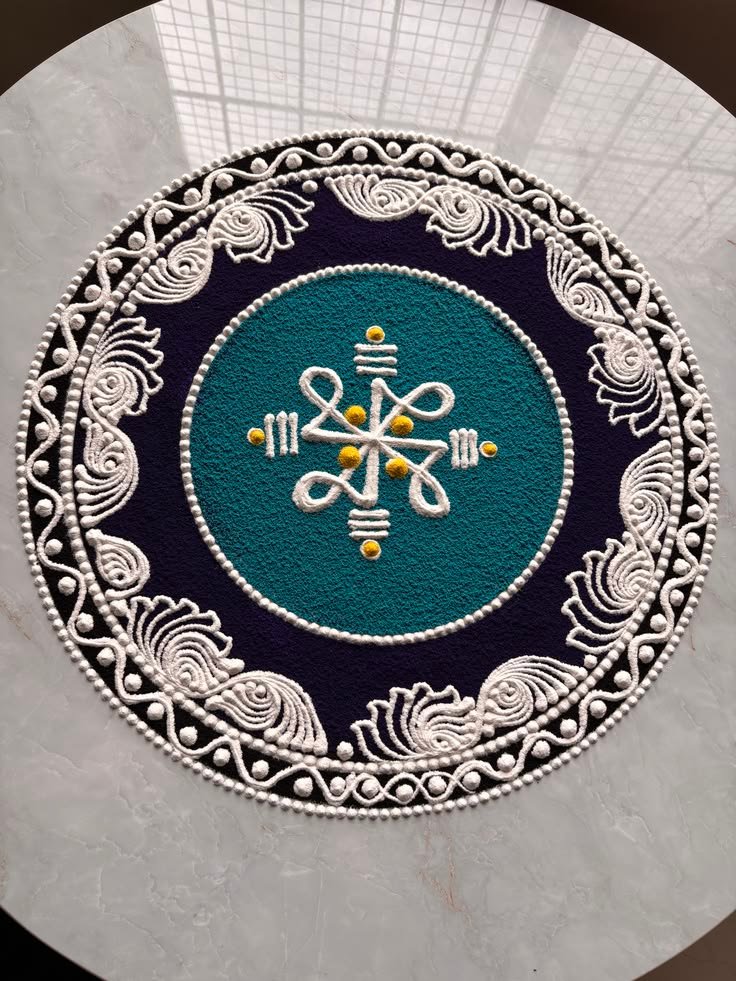
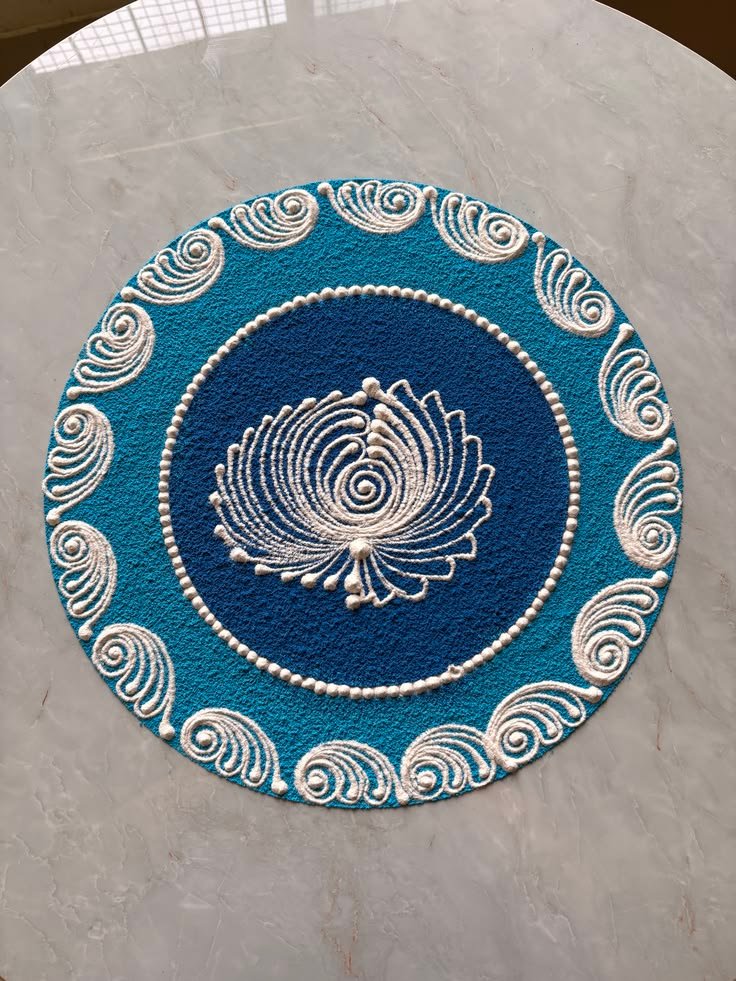
Narak Chaturdashi Rangoli Designs With Flowers
Narak Chaturdashi Rangoli Designs made with flowers bring a natural look to festive decorations. They are particularly useful when you want a colorful design without covering the floor in powder.
Marigold petals provide yellow and orange shades, while rose petals add red and pink tones. White flowers can create borders or separate the sections of a pattern.
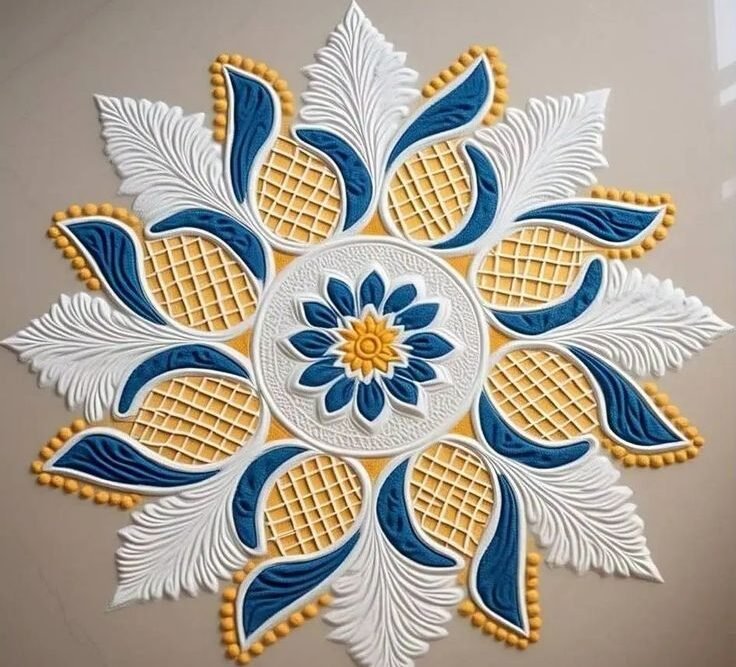
Traditional Narak Chaturdashi Rangoli
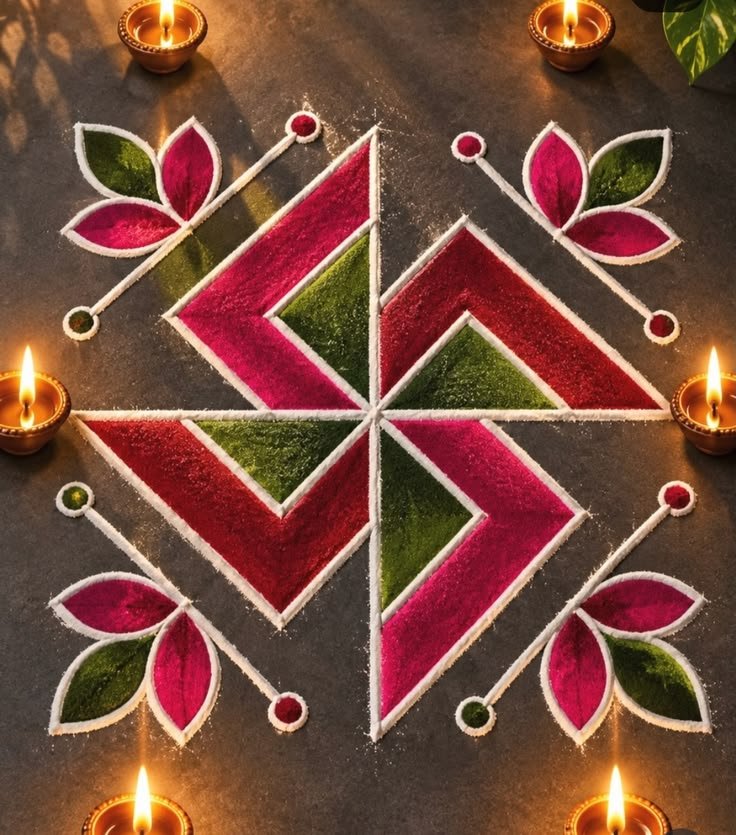
Traditional rangoli often uses symmetrical shapes, dots, flowers, and repeating patterns. These designs suit people who want their decorations to reflect familiar Indian festive styles.
You can start with a central dot and draw circles around it. Add petals, small diamonds, or curved lines to complete the design.
Lotus Narak Chaturdashi Rangoli
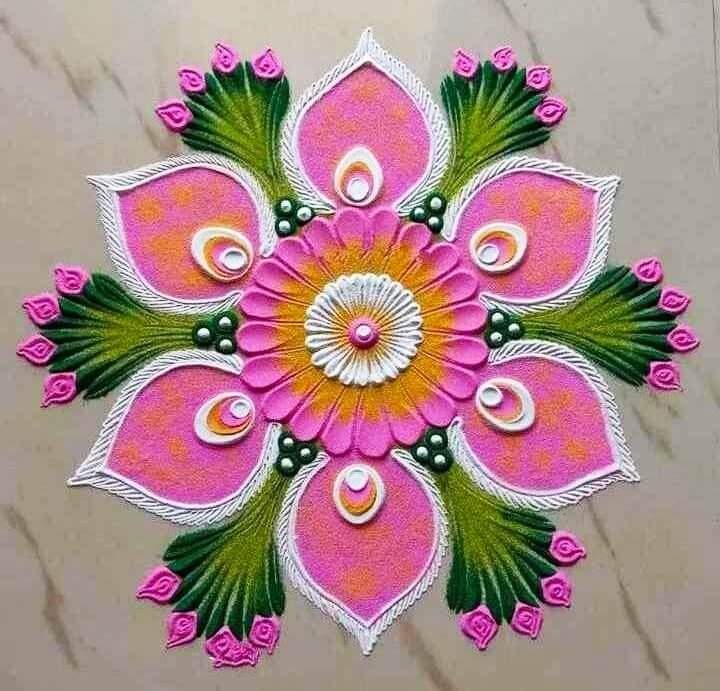
The lotus is a popular motif in Indian art and religious decoration. A lotus-inspired rangoli can look elegant near a prayer area or at the entrance to your home.
Draw a small central circle and add rows of petals around it. Use pink for the main petals, white for the outer border, and green for small leaf shapes.
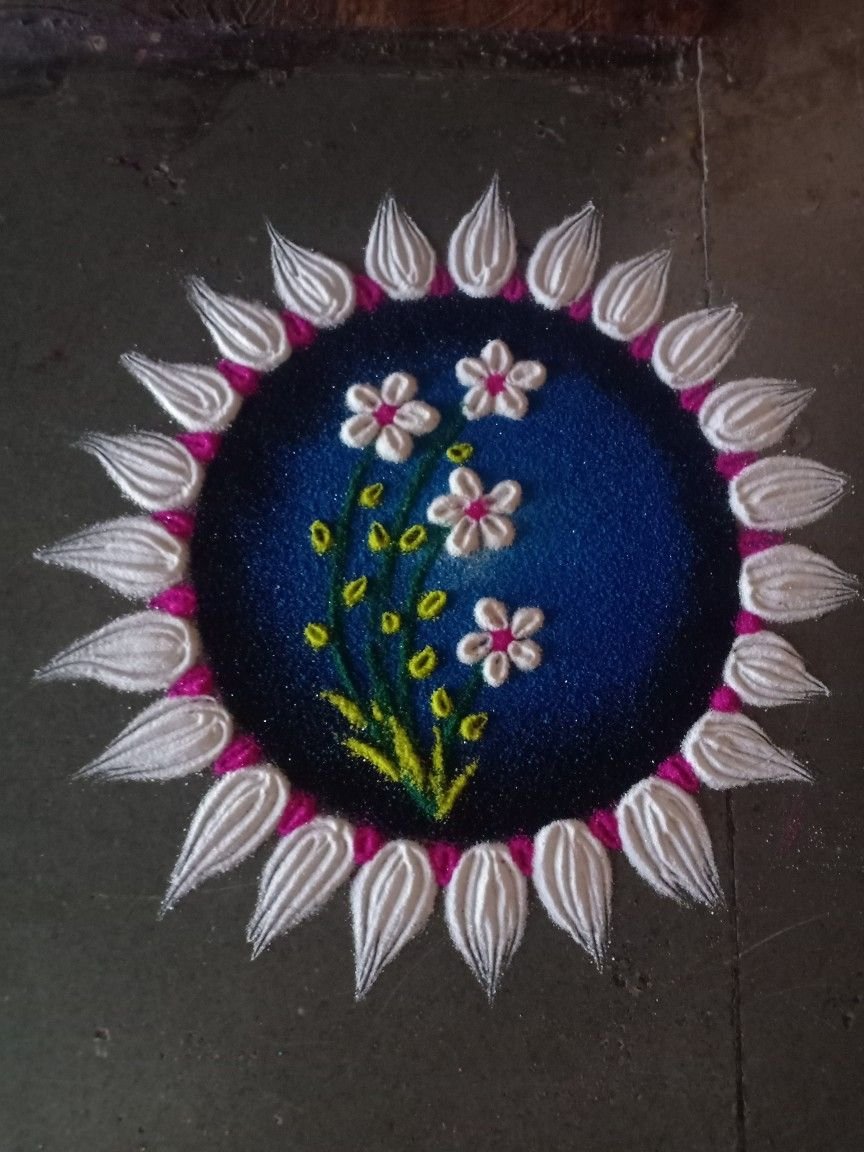
Peacock Narak Chaturdashi Rangoli
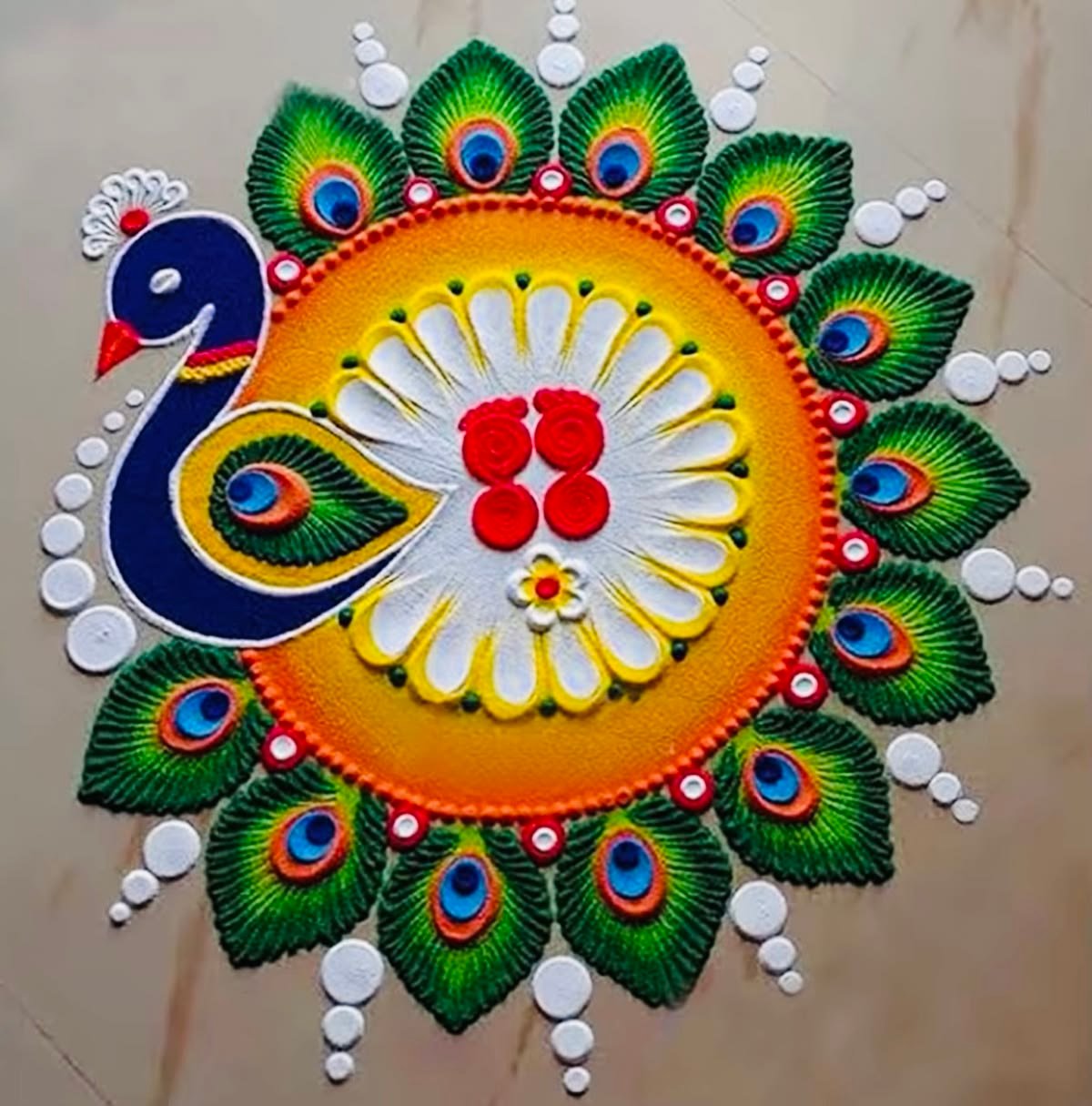
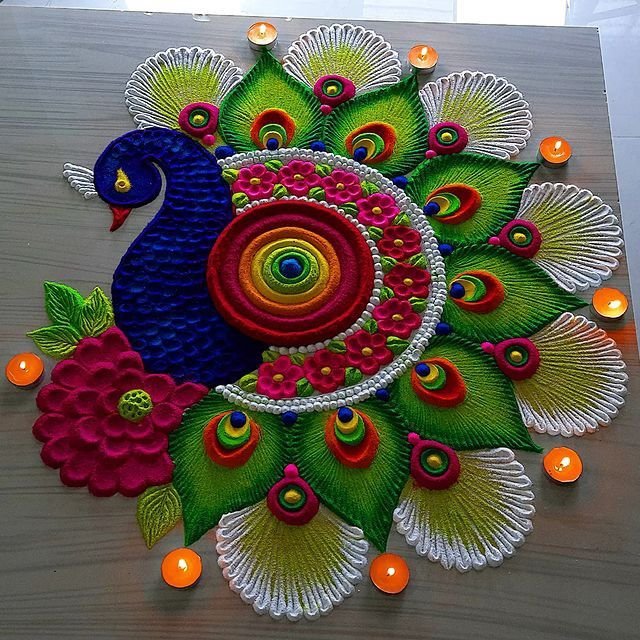
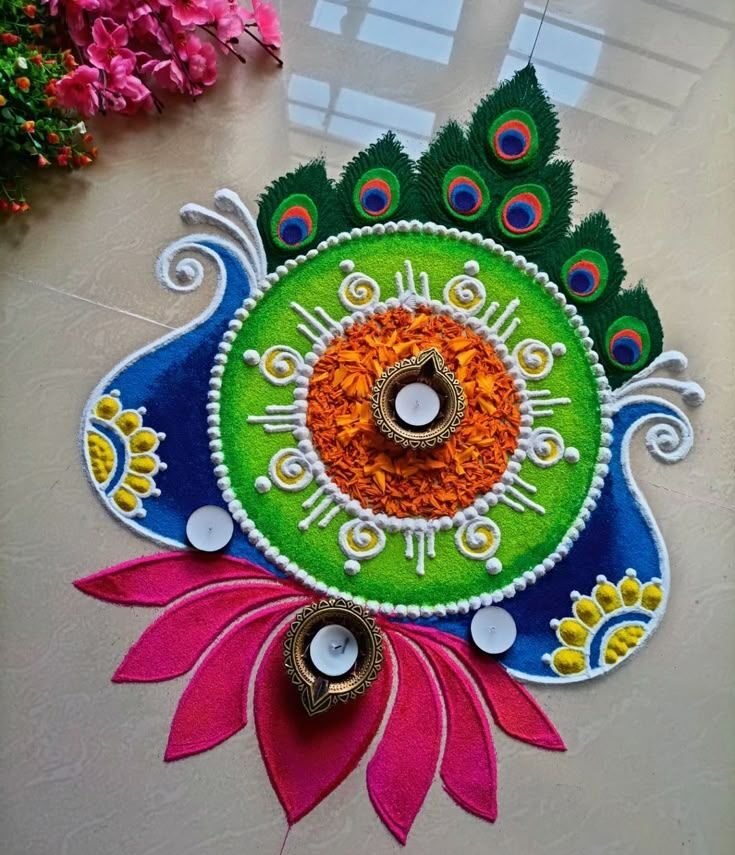
A peacock-inspired design offers an opportunity to use bright colors and curved shapes. Blue, green, turquoise, and yellow can help create the bird’s distinctive appearance.
Begin with a simple outline of the body and tail. Add small circles or teardrop shapes to represent the feathers, then fill the spaces with contrasting colors.
Read More:
- Tulsi Vivah Rangoli
- Dhanteras Rangoli Design
- Attractive Big Rangoli Designs
- Square Rangoli Designs For Diwali
- Laxmi Mata Rangoli Designs For Diwali
- Easy Vasubaras Rangoli
- Flower Rangoli Design
- Creative Unique Rangoli Designs
- Navratri Rangoli Designs
- Small Rangoli Design
- Diya Simple Rangoli Designs For Diwali
- Rangoli Designs For Diwali
- Rangoli Designs With Dots
- Karwa Chauth Rangoli
Conclusion
Narak Chaturdashi Rangoli is a colorful way to bring festive charm to your home during the Diwali season. Whether you prefer a small flower, a traditional diya, a lotus, or a detailed peacock pattern, you can find a design that matches your style and available space.
For beginners, simple circles, flowers, and dotted patterns are practical starting points. People who enjoy detailed artwork can try geometric or peacock designs, while flower petals offer a natural alternative to colored powder.
Explore more fun blogs at Masteryhairstyle
