
Some trips are remembered because of one famous attraction. A mountain journey is different because the experience keeps changing from the moment you leave the city.
The Everest Base Camp Trek with helicopter return combines remote villages, changing landscapes, mountain trails, local traditions, and a very different way of returning. Each part adds something new, making the journey feel much bigger than simply reaching one destination.
Leave City Life Behind Step by Step
The change does not happen all at once. It begins as soon as the busy streets and familiar routines are replaced by mountain surroundings.
Notice the Difference in Daily Life
On the trail, walking becomes part of your normal day. Shops, homes, paths, bridges, and mountain views replace the buildings and traffic you are used to seeing.
This change can feel refreshing because the focus becomes much simpler: walk, eat, rest, and enjoy what is around you.
Experience Villages as Living Communities
The settlements along the route are not just places where trekkers stop for the night. They are homes and working communities with their own daily routines.
Look Beyond the Main Trail
Notice houses, small shops, prayer flags, stone walls, fields, and people going about their day. These details can tell you more about the region than a quick photograph from a viewpoint.
Taking time to observe village life adds another layer to the Everest Base Camp Trek with helicopter return.
Watch the Landscape Transform
One of the most interesting parts of a high-altitude trek is seeing the environment change gradually.
Compare the Beginning With the Higher Trail
Lower sections can feel greener and more sheltered. Higher areas become more open, rocky, and dominated by large mountain formations.
Because the change happens over several days, you get to experience the transition rather than simply arriving in a cold mountain environment.
Discover How Distance Feels Different
Mountain distances can be surprising. A destination that looks close on a map may require several hours of walking because of the terrain.
Do Not Judge the Route by a Straight Line
The trail follows valleys, slopes, bridges, and established paths rather than moving directly toward its destination.
This teaches you to think about distance differently. The journey becomes less about numbers and more about the actual landscape in front of you.
Find Character in the Quiet Moments
Not every memorable part of a trek happens at a famous viewpoint.
A quiet breakfast, an empty trail section, a warm drink, or a conversation at a tea house can become a favorite memory.
Let the Simple Moments Matter
Travelers sometimes focus so much on reaching major landmarks that they overlook ordinary experiences. Giving attention to these small moments can make the entire trip feel more personal.
Understand the Importance of Local Guides
A guide can add context that you might miss when traveling independently.
Ask About What You See
If you pass a monastery, traditional building, mountain landmark, or interesting village feature, ask your guide about it.
Simple questions can help you understand the history and culture behind the landscape instead of seeing everything only as scenery.
Experience a Different Kind of Time
A mountain trek changes how you think about time. There are fewer distractions and fewer reasons to rush from one activity to another.
Let the Day Follow the Trail
Your schedule is naturally shaped by walking conditions, meals, weather, and rest. This can feel very different from a normal vacation filled with fixed appointments.
That slower rhythm is one reason many people find the Everest Base Camp Trek with helicopter return so memorable.
See How Weather Changes the Mood
Mountains can look completely different under different weather conditions.
A clear morning may reveal distant peaks, while clouds can create a completely different atmosphere later in the day.
Treat Weather as Part of the Scenery
Rather than expecting perfect skies every day, appreciate how clouds, sunlight, mist, and shadows change the landscape.
Of course, weather can also affect trekking and helicopter operations, so practical flexibility remains important.
Give Yourself Time to Appreciate the Destination
Reaching Everest Base Camp is an important moment, but it does not need to be rushed.
Look Around Before Moving On
Take a moment to appreciate the surrounding mountains, the trail you have covered, and the environment around the base camp area.
You have spent days reaching this point. Allow yourself enough time to understand the scale of what you have accomplished.
Experience the Landscape From Above
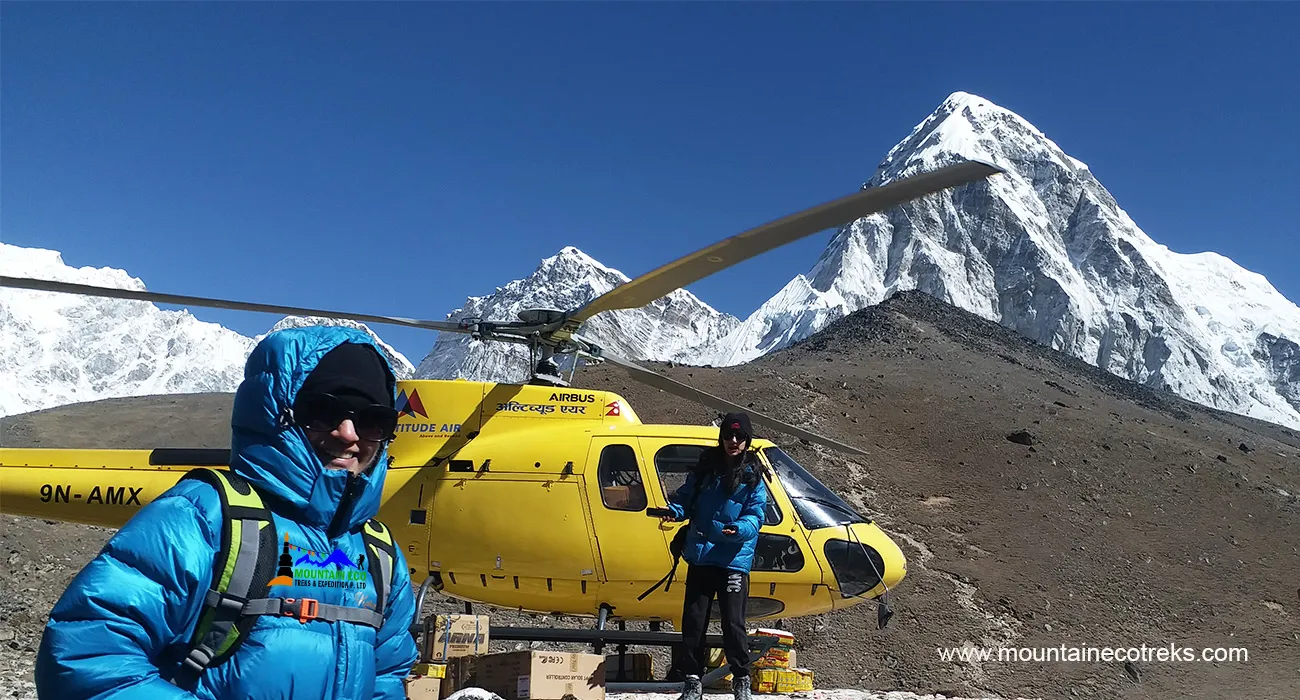
The helicopter return creates a sharp contrast with the walking experience.
After spending days at ground level, you suddenly see the valleys, ridges, trails, and settlements from the air.
Connect the Route You Walked With the View Below
From above, places that took hours to reach can appear surprisingly small. This can help you understand the scale and geography of the region in a completely different way.
It gives the Everest Base Camp Trek with helicopter return an ending that feels different from a traditional return trek.
Bring Home More Than Photographs
Photographs are useful, but they are only one way to preserve a journey.
Keep a few notes, remember conversations, save meaningful details, and think about the parts of the trip that surprised you.
Build a Personal Story
Instead of remembering only “I reached Everest Base Camp,” you can remember the first mountain view, a favorite village, a difficult trail section, a special meal, and the moment you saw the route from above.
These details make your travel story much richer.
Travel in a Way That Respects the Region
The Himalayas are home to communities, wildlife, religious sites, and fragile natural environments.
Avoid unnecessary waste, respect local customs, and treat shared spaces carefully.
Leave the Trail With Care
Simple actions such as carrying your rubbish, following marked routes, and respecting local traditions can make a positive difference.
Responsible travel helps protect the same environment that makes the journey so special.
Final Thoughts: The Journey Is the Real Story
The Everest Base Camp Trek with helicopter return stands out because it offers more than a destination. It gives travelers a gradual transition from city life to high mountain surroundings, with villages, culture, changing terrain, and unforgettable views along the way.
The helicopter adds another perspective at the end, allowing you to look back at the landscape you experienced on foot.
If you pay attention to the small details as well as the famous landmarks, the journey can become a collection of many different memories rather than one single achievement.
Frequently Asked Questions
What makes this trek different from a normal mountain vacation?
The experience develops over several days, allowing travelers to see changing landscapes, villages, cultures, and mountain environments before reaching the destination.
Are the villages part of the trekking experience?
Yes. Villages provide places to rest and also offer an opportunity to observe local architecture, traditions, and everyday life.
Why does the landscape change so much?
Elevation and geography influence vegetation, temperature, and the appearance of the surrounding environment as the route climbs higher.
Is the helicopter ride only for convenience?
It also provides a different perspective of the region. Travelers can see valleys, ridges, and sections of the route from above.
How can I make the Everest Base Camp Trek with helicopter return more memorable?
Pay attention to the entire journey rather than focusing only on Base Camp. Notice village life, landscape changes, local culture, conversations, and small moments along the trail.
Can weather affect the helicopter return?
Yes. Mountain weather can influence helicopter operations, so the timing may need to remain flexible for safety.
