
Let’s be honest: nobody warns you that a six-year-old’s birthday can cost more than your own. Hire a soft play, add a themed cake, a goody bag for twenty and you are quickly looking at a bill with a very worrying number on it.
The good news is that kids are not judging your spend. They want a bit of space to run about, something fun to do and plenty of snacks. Here is how to give them that without turning your bank account into a cautionary tale.
Start with a number, then stick to it
Before you look at a single invitation, write down what you are happy to spend. Not what you think you should spend, what you are actually comfortable with. Then divide it roughly like this:
- Venue or space: nothing if you do it at home, more if you hire
- Food and drink: the biggest chunk
- Entertainment or games: a small slice
- Cake and sweet table: a modest slice
- Party bags and decorations: whatever is left
Treat it like a recipe. If one ingredient goes up, another comes down. A pricey venue means a simpler cake. A big guest list means smaller party bags.
Home, hall or park?
Home is the cheapest option, but it comes with the cost of tidying beforehand and a sofa that may never be the same again. If your living room is on the small side, remember that twelve excited children can feel like forty.
A village or church hall is often a bargain. Many charge a modest hourly rate, give you a kitchen and, best of all, absorb the mess. Ask what is included, particularly tables, chairs and whether you can put decorations up.
The park is free, as long as the weather behaves. It works well in summer and for any child who needs to burn off energy. Have a backup plan, even if it is just a gazebo and a firm belief in optimism.
Keep the guest list sensible
A good rule of thumb is to invite roughly the child’s age plus one, or the whole class if that is the school norm. Smaller groups are cheaper and easier to manage, and your child will likely have a better time with a handful of close friends than twenty children they barely know.
If you do invite the whole class, keep the party short and simple. Two hours is plenty.
Games that cost almost nothing
Entertainers are lovely, but you do not need one. The classics work for a reason:
- Musical statues and musical bumps
- Pass the parcel (wrap a small sweet or sticker between each layer)
- Treasure hunt around the garden or hall
- Sleeping lions, which every parent secretly loves
- Pin the tail on the donkey, or on whatever character is in fashion that year
- A simple relay race with a spoon and a pom-pom
Always plan one more game than you think you need. Kids burn through them faster than you would expect, and a gap with nothing to do is how chaos starts.
Food that does not break the bank
Skip the fancy catering. Children prefer simple things they recognise, and half of it ends up on the floor anyway.
A sensible spread might include sandwiches cut into triangles, sausage rolls, breadsticks and dips, cheese cubes, cucumber sticks, grapes and crisps. Add a jug of squash and you are set.
Serve the savoury food before the sweet stuff. Hungry children fill up on whatever is nearest, and you want them to eat actual food first.
The DIY sweet table
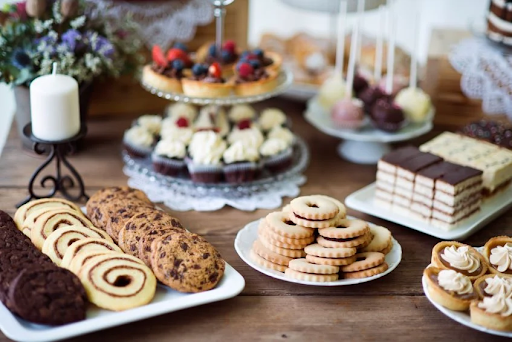
Here is where you can make a big visual impact for relatively little. A sweet table looks fantastic in photos, gives children something to feast their eyes on, and doubles as a party bag when guests leave.
Pick a colour scheme to match your party theme. Pink and gold for a princess party, red and blue for superheroes, bright rainbow for anything else. Then fill clear containers, bowls and cake stands with sweets to match.
If you want to save effort, a ready-made range of kids party sweets takes the guesswork out, and it is easy to choose a few colours that suit your theme. Buying in bulk is usually cheaper than collecting lots of small packets, and loose sweets look much more generous on a table.
A few styling tips:
- Use jars of different heights to make the table look layered
- Add scoops, tongs and paper bags so children can fill their own
- Print a simple sign saying “Take a bag, fill a bag”
- Put the table out of reach until near the end of the party
If you want a statement piece, one large pick n mix jar filled with mixed sweets makes a great centrepiece, and it can go home afterwards as a prize for the birthday child.
Party bags without the waste
Plastic toys from party bags tend to break within the hour and get lost within the day. Fewer, nicer things are better.
Try a paper bag with a small bag of sweets, a sticker sheet and a slice of cake wrapped in a napkin. Or skip the bag entirely and let each child fill a small bag from the sweet table as they leave. It is cheaper, more fun and completely personal.
Safety first: allergies and choking
Before the party, ask every parent about allergies and dietary needs. A short line on the invitation works nicely: “Please let me know about any allergies or dietary requirements.” Keep a list handy on the day.
Check labels on everything, especially cakes, sweets and anything with nuts. Some sweets are made in factories that handle nuts, milk or gluten, so read the warning text. If a child has a serious allergy, it is kinder to avoid the risk altogether and ask the parent for guidance.
Choking is the other thing to keep in mind, especially for children under five. Hard sweets, boiled sweets, lollipops, whole grapes, popcorn and chewy sweets can all be a risk for younger children. Cut grapes lengthways, avoid anything hard or round for little ones, and make sure children sit down when they eat rather than running about with food in their mouths.
If there are toddlers present, set up a separate, safer snack table. And always have an adult watching, not just in the room.
Timing and sugar meltdowns
Plan the day around nap times and mealtimes if you can. Late morning or early afternoon is usually the sweet spot for young children, because they are neither starving nor exhausted.
The sugar-fuelled meltdown is often more about tiredness and excitement than sweets alone. Still, you can help:
- Serve real food before sweets
- Put the cake out late rather than early
- Have water available, not just squash
- Keep a quiet corner for anyone who needs a break
- Finish the party while everyone is still happy
The golden rule is to end on a high. An hour and a half of fun is better than three hours that tail off into tears.
Invitations and RSVPs
Send invitations three to four weeks ahead and put a clear start and finish time on them. A finish time is the secret weapon of every sensible parent, because it tells people when to turn up again and stops the party drifting on.
A free digital invitation or a group message works just as well as printed cards, and saves money. Ask for replies by a set date, then chase politely. Include your phone number, the address, any allergy question and whether parents are welcome to stay or can drop off. That last one prevents a surprising amount of confusion on the day.
Who does what on the day
Do not try to run everything by yourself. Before the party, give a few small jobs to willing adults: one to look after the music, one to help with food, one to take photographs and one to watch the door. Even a teenage cousin can be put in charge of pass the parcel.
If you are doing it alone, simplify. Prepare food in advance, set out plates and cups before anyone arrives and keep a written running order on the fridge. A plan for the first twenty minutes, when children are arriving and everyone is a bit shy, works wonders. Colouring sheets or a simple craft on the table give early arrivals something to do while the rest turn up.
Cleanup without the dread
A few things make the aftermath much easier:
- Put a bin bag by the door and ask guests to chuck their rubbish in as they leave
- Use paper plates and cups, and recycle what you can
- Lay an old tablecloth under the food table
- Keep baby wipes handy for sticky hands and sticky surfaces
- Recruit one or two helpful adults to clear as you go
Whatever you do, give yourself a few quiet minutes afterwards before tackling the lot. You have earned it.
Final thoughts
A good children’s party is not about the money. It is about a happy child, a bit of music, a few games, some tasty snacks and a table of colourful sweets that makes everyone say “ooh” when they walk in.
Plan ahead, keep the numbers sensible, watch the safety details and relax. Nobody remembers whether the napkins matched. They remember laughing and the day they got to fill their own bag of sweets.
