
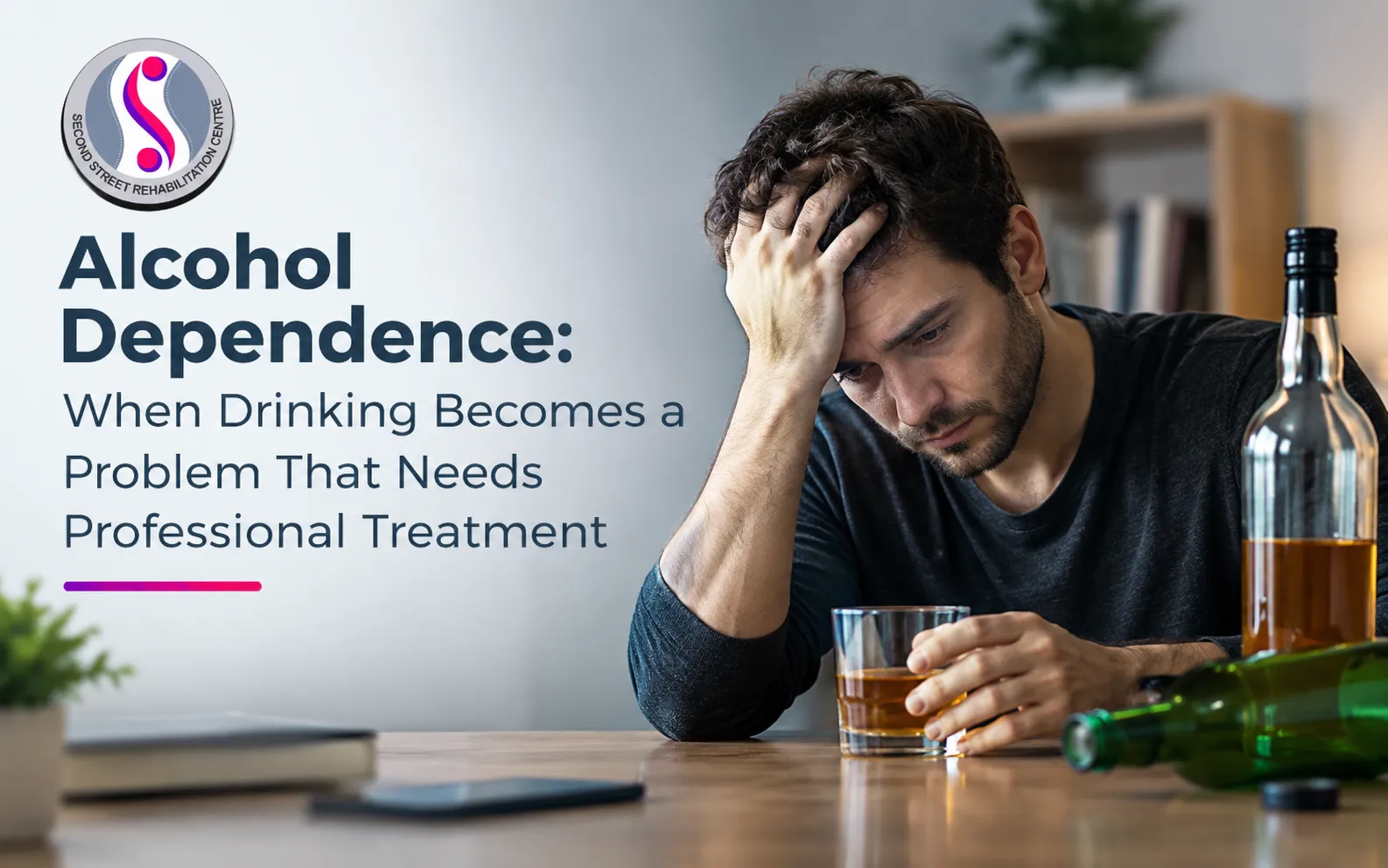
A person does not have to drink every day for alcohol to become a serious problem. The clearer test is what drinking is doing to health, judgement, relationships, work and control. If alcohol repeatedly causes harm and attempts to cut down keep failing, professional assessment is reasonable even before a major crisis occurs.
The World Health Organization describes alcohol as a psychoactive, toxic substance that can cause dependence. Its 2024 fact sheet estimates that 400 million people aged 15 years and older were living with alcohol use disorders in 2019, including 209 million with alcohol dependence. Those numbers matter because they put a familiar family problem in the right frame: dependence is a health condition, not a lack of character.
What changes should a family actually watch for?
Look for a pattern, not one bad evening. Warning signs can include drinking more than planned, needing more alcohol to get the same effect, hiding bottles, missing work, borrowing money, drinking in the morning, memory gaps, repeated arguments or driving after drinking. Physical clues such as tremor, sweating, poor sleep, stomach problems and reduced appetite may appear too.
One question often cuts through the confusion: “What has changed because of the drinking?” If the answer includes safety, money, health or trust, the concern deserves attention. The amount consumed matters, but consequences and loss of control often tell the family more.
Can someone simply stop at home?
Sometimes people can reduce or stop without severe withdrawal. Sometimes they cannot. A person who has been drinking heavily for a long period may develop withdrawal symptoms after cutting down or stopping. These can begin with anxiety, sweating, tremor, nausea and poor sleep. Severe withdrawal can involve seizures, hallucinations or delirium and needs urgent medical care.
That is why a family comparing an alcohol treatment centre in Mumbai should ask who assesses withdrawal risk, what medical support is available and how emergencies are handled. Do not rely on internet detox schedules or leftover medicines. Withdrawal plans should be individual because age, liver health, previous withdrawal, medicines and other substance use can change the risk.
Detoxification is not the same as recovery
Getting alcohol out of the body deals with the immediate physical phase. It does not automatically change the reasons a person drinks, the situations that trigger drinking or the habits built around alcohol. Treatment may therefore include medical review, psychological therapy, relapse-prevention work, support for sleep and mood, family sessions and follow-up after discharge.
For some people, residential care makes sense because alcohol is easily available at home, previous attempts have broken down quickly, or the person needs a stable routine away from high-risk settings. Others may do well with outpatient treatment. The right level of care depends on assessment, not on a fixed package sold to everyone.
What should families ask before choosing treatment?
Ask practical questions. Who makes the diagnosis? Are doctors and mental-health professionals involved when needed? How are medicines reviewed? What happens if the person develops severe withdrawal or another medical problem? How is confidentiality handled? What is the plan after discharge?
A credible programme should be able to answer without promising a cure. Recovery is not a guaranteed result of a 15-day, 30-day or 90-day stay. People differ in severity, health, family support and relapse risk. A trustworthy provider should explain those limits openly.
If you are comparing alcohol rehabilitation treatment, also ask how the programme works on cravings, refusal skills, stress, sleep, mental health and high-risk social situations. That tells you much more than a brochure describing rooms or facilities.
How should a family start the conversation?
Pick a time when the person is sober and the setting is calm. Use recent, observable facts. “You missed work twice after drinking this month” is easier to discuss than “you have ruined everything”. Avoid gathering five relatives for an ambush unless a clinician has specifically recommended a structured intervention.
Support does not mean covering every consequence. Repeatedly paying debts, lying to an employer or making excuses can reduce short-term conflict while allowing the drinking pattern to continue. Families may need guidance on boundaries as much as the person needs treatment.
When should the situation be treated as urgent?
Seek emergency help for seizures, severe confusion, hallucinations, collapse, breathing difficulty, serious injury, suspected poisoning or suicidal thoughts. If someone is intoxicated and difficult to wake, do not assume they only need sleep.
For families in Mumbai, Thane or elsewhere in India, the practical decision is not whether the person “looks like an alcoholic”. Ask whether alcohol is repeatedly causing harm, whether control is slipping and whether stopping may be medically risky. If the answer is yes, an assessment is the sensible next step. Treatment works best when it is based on the person’s actual risks and needs, not on shame or last-minute panic.
There is also no need to wait for the person to agree with the word “dependence”. Many families lose time arguing over terminology. An assessment can still clarify whether the drinking pattern meets clinical criteria, whether withdrawal is likely and what level of care is appropriate. If the clinician finds that residential treatment is unnecessary, that is useful information too. The purpose of assessment is not to sell admission; it is to match care to risk. That distinction is worth remembering when several centres make very different recommendations for the same person.
